





-
Generational Succession Procedures for Knowledge Retention in Companies of the Basque Autonomous Community (Spain) -
Bibliometric Analysis of Key Variables in Tourism (2000–2023) -
Leading in the Digital Age -
Economic Impact Analysis of Mega Events for Sustainable Tourism: Insights from the Giro d’Italia and Tour de France -
Trends in InsurTech Development in Korea
Journal Description
Administrative Sciences
is an international, peer-reviewed, scholarly, open access journal on organization studies published monthly online by MDPI.
- Open Access— free for readers, with article processing charges (APC) paid by authors or their institutions.
- High Visibility: indexed within Scopus, ESCI (Web of Science), RePEc, EconBiz, and other databases.
- Journal Rank: JCR - Q2 (Management) / CiteScore - Q2 (General Business, Management and Accounting)
- Rapid Publication: manuscripts are peer-reviewed and a first decision is provided to authors approximately 29.1 days after submission; acceptance to publication is undertaken in 4.6 days (median values for papers published in this journal in the second half of 2024).
- Recognition of Reviewers: reviewers who provide timely, thorough peer-review reports receive vouchers entitling them to a discount on the APC of their next publication in any MDPI journal, in appreciation of the work done.
Impact Factor:
3.0 (2023);
5-Year Impact Factor:
3.0 (2023)
Latest Articles
Millennial Leaders’ Preferences for Leadership Development: A Qualitative Analysis
Adm. Sci. 2025, 15(4), 135; https://doi.org/10.3390/admsci15040135 (registering DOI) - 4 Apr 2025
Abstract
Currently the largest workforce in the workplace, the millennial generation is perceived as being different to the preceding generations in the workplace, namely, baby boomers and generation X. Millennials are also seen as the leadership pipeline, yet leadership development that meets the needs
[...] Read more.
Currently the largest workforce in the workplace, the millennial generation is perceived as being different to the preceding generations in the workplace, namely, baby boomers and generation X. Millennials are also seen as the leadership pipeline, yet leadership development that meets the needs of this generation appears to be absent. The objective of this study was to explore what millennial leaders are looking for concerning leadership development and training. Semi-structured interviews were conducted with 12 millennial leaders employed in one large financial services organisation in South Africa. Content analysis was used to analyse the qualitative data collected, and coded themes were generated. The participants’ responses favoured more specific leadership development, such as structured mentorship programmes, experiential learning or on-the-job training, soft skills training, and digital online training with remote access. These findings, coupled with a close affinity shown for the more modern empowering and transformational leadership styles, closely align with the literature and affirm the need for a specialised and tailor-made leadership development strategy for millennial leaders. Organisations should take heed of what millennial leaders are looking for to become effective leaders in filling the leadership pipeline for the workplace. This research largely affirms international research trends that specify millennials as a unique group and the importance of revising traditional leadership development programmes for this generation as leaders.
Full article
(This article belongs to the Section Leadership)
Open AccessArticle
Unveiling Dynamic Capabilities in Public Procurement: Myths, Realities, and Strategic Transformation
by
Vera Ndrecaj, Issam Tlemsani and Mohamed Ashmel Mohamed Hashim
Adm. Sci. 2025, 15(4), 134; https://doi.org/10.3390/admsci15040134 - 3 Apr 2025
Abstract
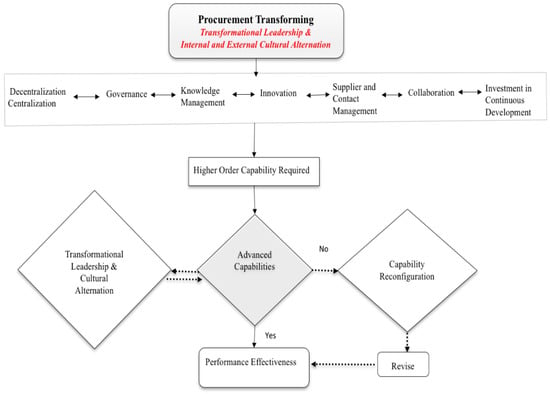
This study explores the application of the dynamic capabilities (DCs) sensing, seizing, and transforming in strategic public sector procurement (SPSP) and examines whether these capabilities represent a tangible reality or a conceptual myth. Drawing on qualitative data from six Welsh local authorities (WLAs),
[...] Read more.
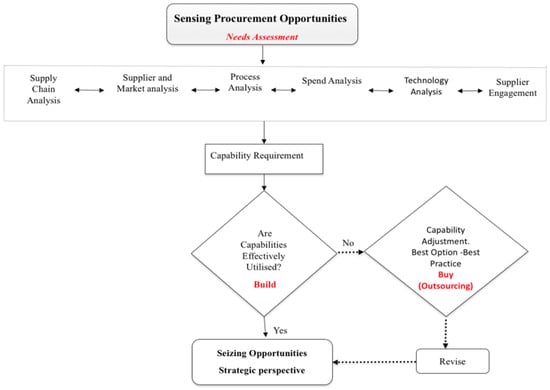
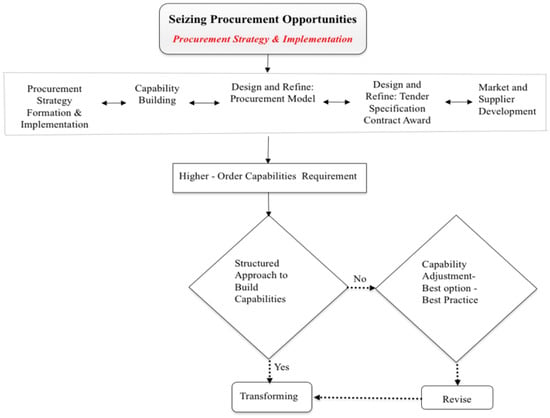
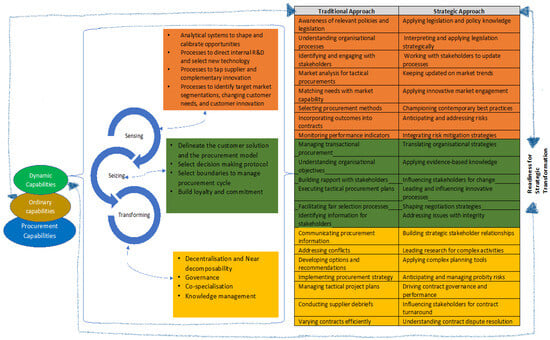
This study explores the application of the dynamic capabilities (DCs) sensing, seizing, and transforming in strategic public sector procurement (SPSP) and examines whether these capabilities represent a tangible reality or a conceptual myth. Drawing on qualitative data from six Welsh local authorities (WLAs), this research investigates the extent to which DCs enable organizations to navigate complex procurement environments and achieve strategic transformation. The findings reveal significant variations in the operationalization of DCs. Larger authorities demonstrated robust sensing and seizing capabilities, leveraging market intelligence, collaborative initiatives, and innovative procurement strategies to align with broader organizational objectives. Conversely, smaller authorities faced institutional barriers, such as resource limitations and leadership turnover, which hindered their ability to implement and sustain DCs effectively. While transformative initiatives, including category management and innovative service models, were evident in some cases, challenges in leadership stability and cultural adaptability limited their widespread application. This study highlights the gap between theoretical frameworks and practical implementation, emphasizing the need for tailored approaches to building DCs in diverse public sector contexts. By mapping procurement DCs and proposing an integrated conceptual framework, this research contributes to the literature on strategic management in public procurement and offers actionable insights for policymakers and practitioners. Future research should explore DCs in broader public sector settings.
Full article
(This article belongs to the Section Strategic Management)
►▼
Show Figures

Figure 1
Open AccessArticle
Perspectives and Realities of Disengagement Among Younger Generation Y and Z Workers in Contemporary Work Dynamics
by
Margarida Saraiva and Teresa Nogueiro
Adm. Sci. 2025, 15(4), 133; https://doi.org/10.3390/admsci15040133 - 3 Apr 2025
Abstract
The disengagement of younger workers, particularly from Generations Y and Z, is a growing concern in contemporary organizational environments. This study analyzes the factors influencing disengagement and the organizational strategies that can reduce its impact. A literature review was conducted, covering studies published
[...] Read more.
The disengagement of younger workers, particularly from Generations Y and Z, is a growing concern in contemporary organizational environments. This study analyzes the factors influencing disengagement and the organizational strategies that can reduce its impact. A literature review was conducted, covering studies published between 2014 and 2024, with the selection of publications based on relevance, indexing, and thematic alignment. The findings indicate that disengagement results from a combination of factors. Firstly, job demand factors were identified, such as the misalignment between well-being policies and employee needs, excessive workloads, the absence of remote work and flexible schedules, challenges associated with digitalization and new technologies, economic insecurity, job instability, and frequent organizational changes. Secondly, job resource factors were also highlighted, including inadequate leadership, ineffective communication, limited professional development opportunities, and poorly structured evaluation and reward systems. These findings align with the Job Demands-Resources (JD-R) Model. In addition, psychological factors were observed, namely, a lack of autonomy, experiences of injustice and inequality in the workplace, misalignment between personal values and organizational culture, and the presence of hostile or toxic environments, which correspond to the theoretical assumptions of the Self-Determination Theory (SDT).To address disengagement, organizations should implement organizational strategies, such as physical and mental well-being programs, encourage regular breaks, promote healthy lifestyle campaigns, provide psychological support, and create ergonomic work environments. Additionally, they should foster professional growth through continuous training, mentoring, and transparent recognition and reward systems. Organizational communication must be open and effective, ensuring transparency and active employee participation. The adoption of remote work policies and flexible schedules, along with investments in technology and collaboration tools, also helps maintain engagement. These strategies promote employee satisfaction, motivation, and organizational commitment among workers, particularly those from Generations Y and Z, so organizations must adapt to the evolving expectations of the workforce to prevent long-term negative effects, such as decreased productivity and higher turnover, compromising their competitiveness and sustainability.
Full article
Open AccessArticle
Incorporating Supply Chain Strategies into Organizational Excellence: The Moderating Role of Supply Chain Dynamism in an Export Sector of an Emerging Economy
by
Yasmeen Baddar, Fathi Alarabi Yosef and Luay Jum’a
Adm. Sci. 2025, 15(4), 132; https://doi.org/10.3390/admsci15040132 - 3 Apr 2025
Abstract
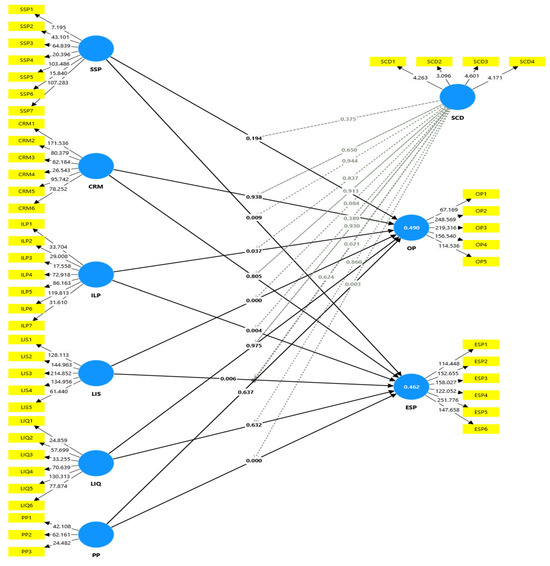
Nowadays, the emphasis on sustainable performance highlights the necessity for resilience and innovation in tackling environmental and economic concerns within supply chain operations. Therefore, this study investigates the impact of six supply chain management practices (SCMPs) on organizational performance (OP) and environmental sustainability
[...] Read more.
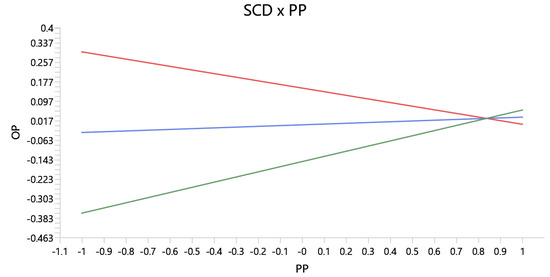
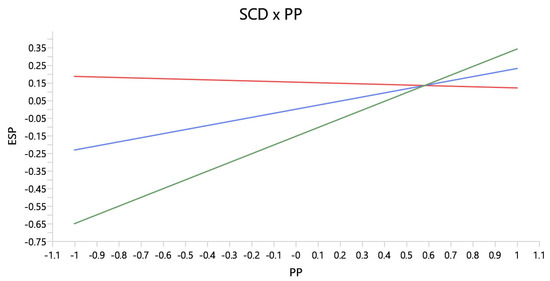
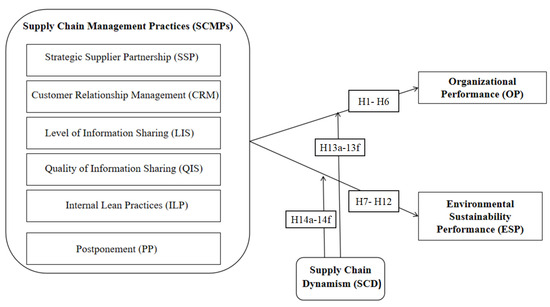
Nowadays, the emphasis on sustainable performance highlights the necessity for resilience and innovation in tackling environmental and economic concerns within supply chain operations. Therefore, this study investigates the impact of six supply chain management practices (SCMPs) on organizational performance (OP) and environmental sustainability performance (ESP), along with the moderating role of supply chain dynamism. This research was conducted within medium and large export manufacturing firms in Jordan’s Garment, Textile, and Leather (GTL) sector, a pivotal export industry critical to the country’s economy. Data were gathered from 204 managers, employing an online self-administered questionnaire, using a quantitative research approach. The hypotheses were examined via structural equation modeling (SEM) through the SmartPLS software4. The findings reveal that ESP was significantly influenced by strategic supplier partnership and postponement. Additionally, the level of information sharing and internal lean practices were found to have a dual impact on both OP and ESP. Supply chain dynamism acted as a significant moderator only in the relationship between postponement and both OP and ESP. This study fills a significant gap in the GTL context in developing economies for export manufacturing firms that contribute to the current literature. What makes it original is its consideration of supply chain dynamism as a moderating variable and its context in an important sector for Jordan’s economy. In conclusion, the results present valuable implications for practitioners on developing custom SCMPs for sustainable and operational performance objectives in the dynamic supply chain context. Future studies should adopt probability sampling methods to improve the generalizability of the findings. Further, the findings should be confirmed by conducting a study on other exporting sectors or geographical areas to gain additional perspectives on the relationships between SCMPs, OP, and ESP.
Full article
(This article belongs to the Special Issue Supply Chain Management in Emerging Economies)
►▼
Show Figures

Figure 1
Open AccessArticle
Research Management in Higher Education Institutions from Developing Countries: An Analysis for Bolivia and Paraguay
by
Luis Pacheco, Fernando Oliveira Tavares, Makhabbat Ramazanova, Jorge Fuentes Ávila, Helena Albuquerque, Fátima Matos Silva, Jorge Marques, Mario Guillo, Beatriz Barrera Zuleta and Silvia Marín Guzmán
Adm. Sci. 2025, 15(4), 131; https://doi.org/10.3390/admsci15040131 - 2 Apr 2025
Abstract
Research outputs in higher education institutions (HEIs) are crucially dependent on the research management process. Departing from a SWOT analysis, the main objective of this paper is to analyze the perceptions of stakeholders (researchers, teachers, and senior research managers) regarding the main strengths
[...] Read more.
Research outputs in higher education institutions (HEIs) are crucially dependent on the research management process. Departing from a SWOT analysis, the main objective of this paper is to analyze the perceptions of stakeholders (researchers, teachers, and senior research managers) regarding the main strengths and weaknesses of HEIs, as well as assess the potential opportunities and threats present in the external environment. It analyzed a total of 462 responses from seven HEIs and two ministries participating in the INNOVA project in Bolivia and Paraguay. The results from the statistical analysis indicate that the respondents tend to identify the traditional obstacles and facilitators to research development, namely, the scarcity and instability of public policies, which permeate the institutions, diminishing the consistency of internal research policies and creating difficulties in access to funding and career development opportunities. Building on the substantial progress made in recent years, the unvirtuous cycle may be halted with political stability and committed action between all the concerned parties.
Full article
Open AccessArticle
Women’s Entrepreneurship in the Tourism Industry: A Bibliometric Study
by
Ainhoa del Pino Rodríguez-Vera, Dolores Rando-Cueto and Carlos de las Heras Pedrosa
Adm. Sci. 2025, 15(4), 130; https://doi.org/10.3390/admsci15040130 - 1 Apr 2025
Abstract
►▼
Show Figures
Women’s entrepreneurship in the tourism industry plays a vital role in promoting economic growth, advancing gender equality, and encouraging innovation. Female entrepreneurs contribute to the diversification of tourism services, job generation, and the revitalization of local economies. This study employs data from the
[...] Read more.
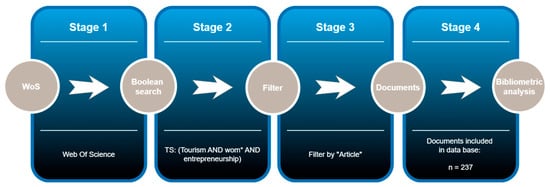
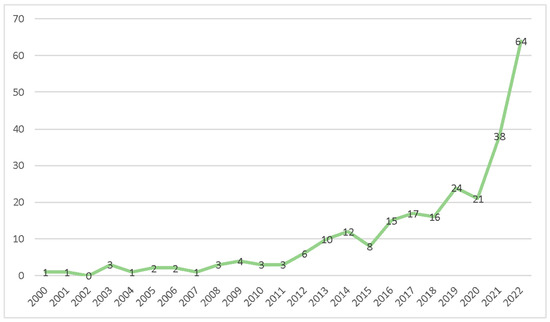
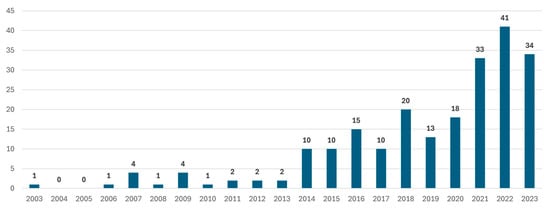
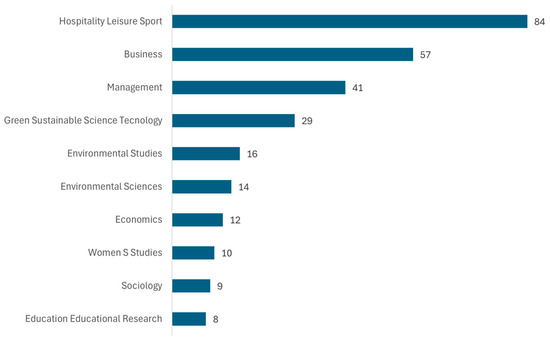
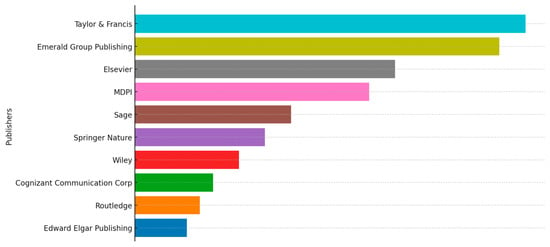
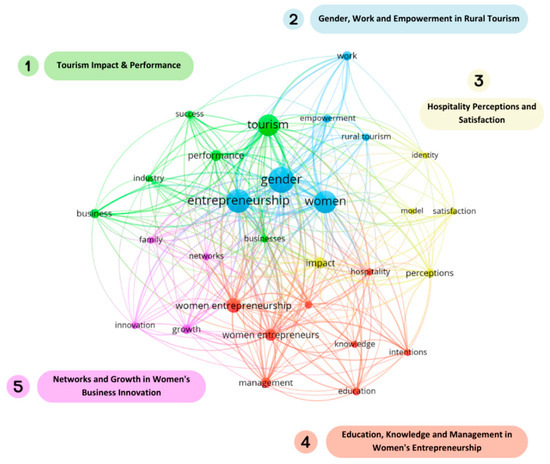
Women’s entrepreneurship in the tourism industry plays a vital role in promoting economic growth, advancing gender equality, and encouraging innovation. Female entrepreneurs contribute to the diversification of tourism services, job generation, and the revitalization of local economies. This study employs data from the Web of Science database to examine research on tourism and female entrepreneurship over the past two decades. The primary goals are to explore emerging trends, publishing patterns, and the geographical regions most active in this area of research, as well as to identify the key journals, authors, and keywords shaping the field. The bibliometric analysis uncovers the progression of academic studies and highlights regions with significant research activity. While female entrepreneurship is a driving force for economic development and gender equity in tourism, persistent obstacles, such as limited research in certain areas and barriers to women’s participation, remain. This work underscores the increasing significance of women’s contributions to tourism and offers a framework for future studies and policies aimed at fostering gender equality and sustainable economic development.
Full article

Figure 1
Open AccessSystematic Review
Digital Leadership: A Systematic Literature Review
by
José Carlos López-Figueroa, Sergio Ochoa-Jiménez, María Olivia Palafox-Soto and Dalia Sujey Hernandez Munoz
Adm. Sci. 2025, 15(4), 129; https://doi.org/10.3390/admsci15040129 - 1 Apr 2025
Abstract
The COVID-19 pandemic and digital disruption have transformed the world and organizations on an unprecedented scale, presenting leaders with unique challenges and creating an opportunity to study digital leadership. This area of research is expanding significantly, though it remains in a developmental and
[...] Read more.
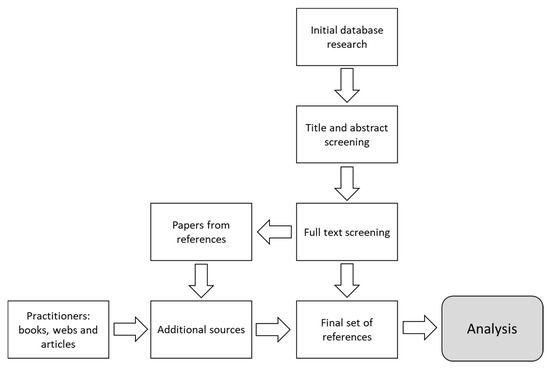
The COVID-19 pandemic and digital disruption have transformed the world and organizations on an unprecedented scale, presenting leaders with unique challenges and creating an opportunity to study digital leadership. This area of research is expanding significantly, though it remains in a developmental and maturing phase. To date, theoretical studies are predominant, including systematic reviews, literature reviews, and bibliometric studies. This study conducts a systematic literature review and science mapping of 74 documents published between 2000 and 2022 in the Web of Science database, using VOSviewer software to analyze the field’s evolution. Findings reveal that research on digital leadership has grown, with digital transformation, digitalization, COVID-19, information and communication technologies, virtual teams, and creativity emerging as core themes in this domain. This study concludes that the effective implementation of digital leadership requires not only technological skills but also human-centered competencies; its application has predominantly expanded in the education sector, with limited use in construction.
Full article
(This article belongs to the Section Leadership)
►▼
Show Figures

Figure 1
Open AccessArticle
Understanding How Business Transformation Processes Are Driven: A Business Agility Model
by
Alonso Alvarez and Borja Bordel
Adm. Sci. 2025, 15(4), 128; https://doi.org/10.3390/admsci15040128 - 31 Mar 2025
Abstract
Agile transformation processes are of critical importance in the contemporary business environment, as companies invest a significant amount of resources, time, and attention into achieve a state of business agility. These processes are complex, and companies lack reference roadmaps, guides, and even a
[...] Read more.
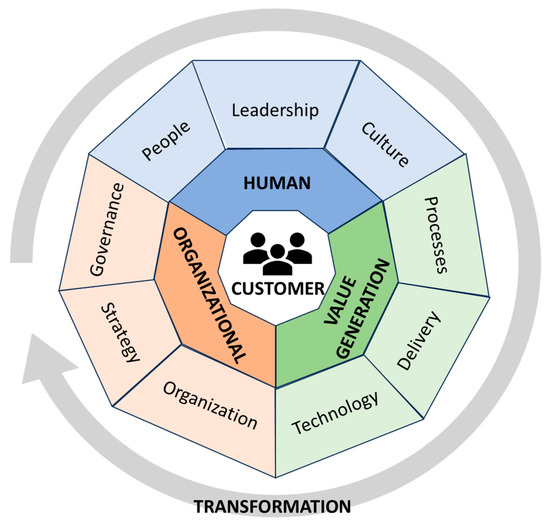
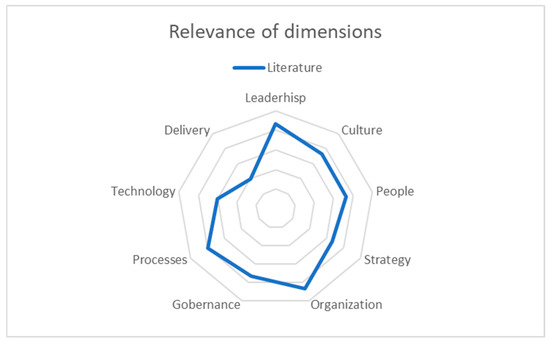
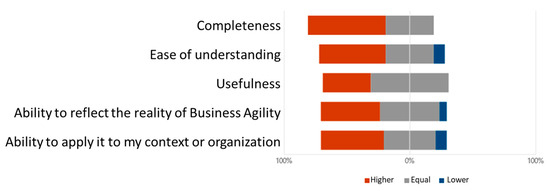
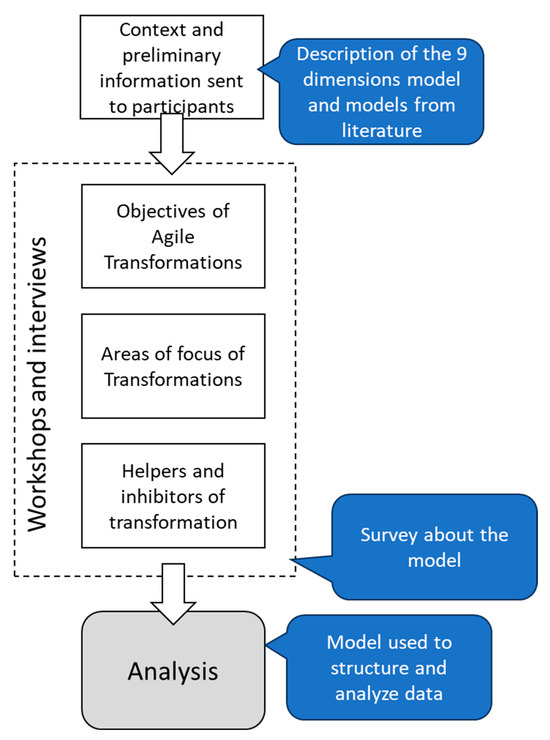
Agile transformation processes are of critical importance in the contemporary business environment, as companies invest a significant amount of resources, time, and attention into achieve a state of business agility. These processes are complex, and companies lack reference roadmaps, guides, and even a common language to successfully achieve their goals. To assist organizations in these transformations, several business agility models have been proposed to help understanding where the transformation effort must be applied and where its effects will be manifested. However, there are numerous such transformations, which may be partial, and which reflect the author’s beliefs and preferences, rather than necessarily aligning with the needs of organizations. Therefore, more comprehensive and general models are required. This paper addresses this challenge. Through a rigorous search and review process of the existing literature, 15 models were identified and used as a basis. After a process of analysis and refinement based on the completeness of business agility, the frequency with which their dimensions are mentioned in the models were analyzed, and the simplicity in the result was searched for, we propose a model based on nine dimensions. Each dimension describes where to focus the transformation process, plan the necessary actions, understand the results, and compare the process with other similar processes. The proposed model is comprehensive and highlights the dimensions most frequently mentioned in various cases and in the state of the art. It applies to the concept of completeness in business agility, covering the entire organization, instead of partial and biased views. This approach has been validated through a survey of participants in an ongoing study about agile transformations to increase the adaptability and sustainability of organizations. Our proposal has some known limitations, such as the criteria used in its elaboration, its granularity, and the equivalence of its dimensions with other models. As for its use, it is a tool, not a roadmap or a detailed transformation plan, and it has not yet been empirically validated.
Full article
(This article belongs to the Special Issue Innovation Management of Organizations in the Digital Age)
►▼
Show Figures

Figure 1
Open AccessArticle
The Psychological Ownership and Task Performance Relationship: The Mediating Role of Intrapreneurial Behavior
by
Ghufran A. Dahlawi, Nada Saleh Badawi and Mohammad Asif Salam
Adm. Sci. 2025, 15(4), 127; https://doi.org/10.3390/admsci15040127 - 30 Mar 2025
Abstract
Employee task performance plays a critical role in driving organizational success, and understanding its interaction with employee psychological status is essential for unlocking a workforce’s full potential. Psychological ownership has been shown to significantly influence performance outcomes, making it crucial to explore how
[...] Read more.
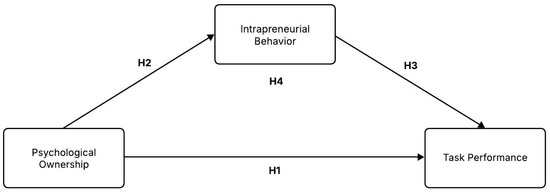
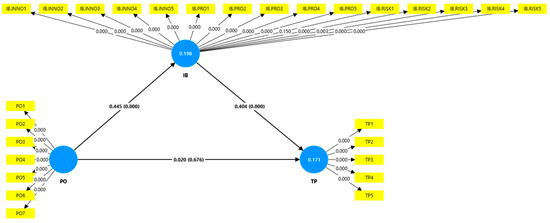
Employee task performance plays a critical role in driving organizational success, and understanding its interaction with employee psychological status is essential for unlocking a workforce’s full potential. Psychological ownership has been shown to significantly influence performance outcomes, making it crucial to explore how these dynamics shape individual effectiveness. This study attempts to gain a deeper understanding of how employees’ sense of ownership influences their intrapreneurial behavior and contributes to enhanced task performance outcomes within organizational settings. A sample of full-time employees based in the United States provided 523 responses on an online questionnaire. The hypotheses were tested using SmartPLS. The findings support that intrapreneurial behavior exhibits full mediation of task performance’s relationship with psychological ownership. The outcomes indicate that when employees feel a sense of personal responsibility and attachment to their work, it significantly fosters their innovative actions and enhances their performance, thereby contributing to organizational success. This study contributes to the existing literature by arguing that employees who feel attached to the organization take more responsibility, improve performance, and proactively establish creative innovations to foster organizational success. Study limitations and recommendations are discussed.
Full article
(This article belongs to the Section Organizational Behavior)
►▼
Show Figures

Figure 1
Open AccessArticle
Public Sector Transformation in Emerging Economies: Factors Affecting Change Adoption in Pakistan
by
Muhammad Kamran Nawaz, Ahmed Eltweri, Khalid Abbas, Wa’el Al-Karaki, Farag Edghiem, Scott Foster and Munir Adali
Adm. Sci. 2025, 15(4), 126; https://doi.org/10.3390/admsci15040126 - 29 Mar 2025
Abstract
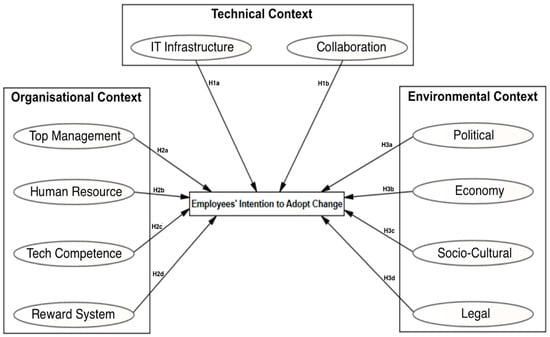
Organizational change remains a significant challenge in developing countries, often hindered by entrenched bureaucratic cultures and resistance to reform. This study investigates the key determinants of change acceptance among public sector employees in Pakistan, focusing on the Khyber Pakhtunkhwa (KPK) region. Using a
[...] Read more.
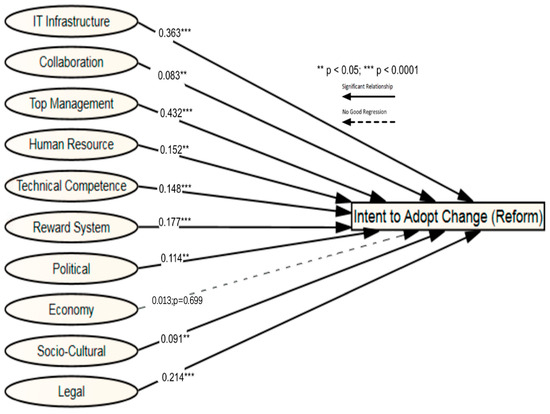
Organizational change remains a significant challenge in developing countries, often hindered by entrenched bureaucratic cultures and resistance to reform. This study investigates the key determinants of change acceptance among public sector employees in Pakistan, focusing on the Khyber Pakhtunkhwa (KPK) region. Using a survey of 320 public sector workers, this research examines employee attitudes toward organizational change through a multi-conceptual framework that incorporates technical, organizational, and environmental factors. Ten influencing factors were analyzed using Structural Equation Modeling (SEM) in AMOS. The findings reveal a strong positive relationship between nine factors—change management, IT infrastructure, reward systems, technical competency, top management support, legal frameworks, organizational culture, and HRM practices—and employees’ willingness to accept change. This study presents a robust explanatory model with high predictive power for change acceptance. It provides valuable insights into reform dynamics in developing nations and offers practical strategies to guide successful public sector change management initiatives.
Full article
(This article belongs to the Special Issue Navigating New Horizons in Organization Theory: Emerging Trends and Innovative Perspectives)
►▼
Show Figures

Figure 1
Open AccessArticle
Effects of Organizational Culture and Pay Levels on Employee Retention: Focused on Generational Difference
by
Myeongju Lee, Kyetaik Oh and Hyunok Kim
Adm. Sci. 2025, 15(4), 125; https://doi.org/10.3390/admsci15040125 - 28 Mar 2025
Abstract
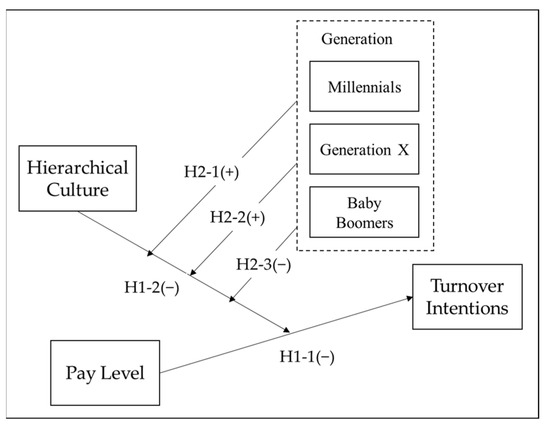
Research on generational differences in the workplace is important as it leads to more effective recruitment, retention, and employee wellbeing in terms of human resource management. This study investigates whether there are differences in perceptions of turnover intention, pay level, and organizational culture
[...] Read more.
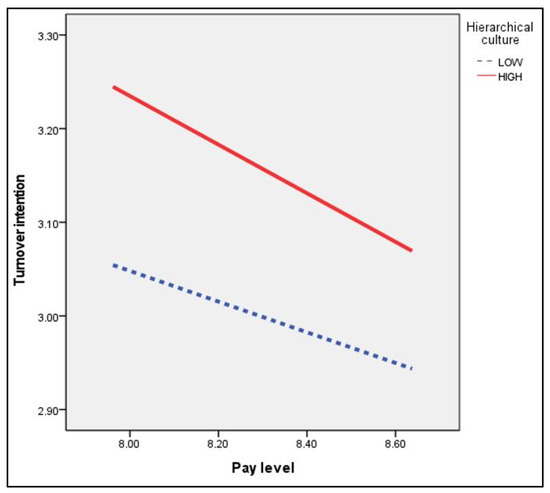
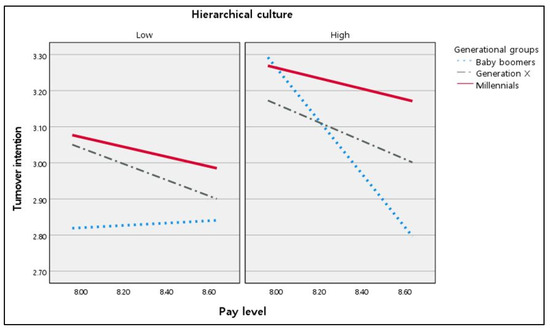
Research on generational differences in the workplace is important as it leads to more effective recruitment, retention, and employee wellbeing in terms of human resource management. This study investigates whether there are differences in perceptions of turnover intention, pay level, and organizational culture between different generational groups. First, this study identifies the relationship between pay level and turnover intention. Second, it confirms the moderating effect of organizational culture on the relationship between pay level and turnover intention. Finally, a three-way interaction analysis was conducted to determine whether these relationships differed between Baby Boomers, Gen Xers, and Millennials. As a result of the empirical analysis, the millennial generation showed higher turnover intention than other generations. It was confirmed that the effect of hierarchical culture was greater than that of pay level on the decrease in turnover intention in the millennial generation than in other generations. In other words, it was found that as the hierarchical culture weakened, the turnover intention of Millennials decreased more significantly than that of other generations. Based on these findings, we propose recommendations for understanding Millennials in the workplace and managing generational diversity.
Full article
(This article belongs to the Section Organizational Behavior)
►▼
Show Figures

Figure 1
Open AccessArticle
The Impact of Digital Content Marketing on Brand Defence: The Mediating Role of Behavioural Engagement and Brand Attachment
by
Sakher Faisal Ahmad AlFraihat, Ahmad Mahmoud Ali, Gassan Hodaifa and Mahmoud Alghizzawi
Adm. Sci. 2025, 15(4), 124; https://doi.org/10.3390/admsci15040124 - 27 Mar 2025
Abstract
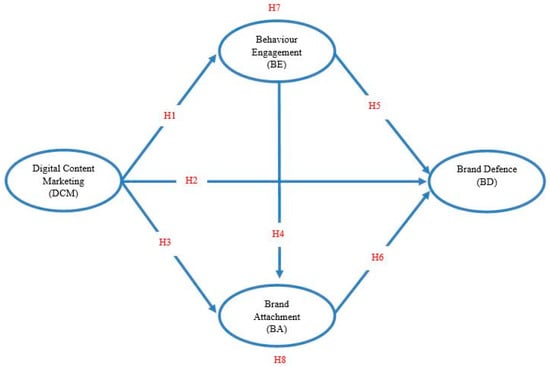
Marketers are increasingly interested in digital content marketing (DCM) strategies that have the potential to enhance consumer behaviour. However, there is a dearth of academic research that delves into the impact of DCM on brand defence. This study aims to investigate the impact
[...] Read more.
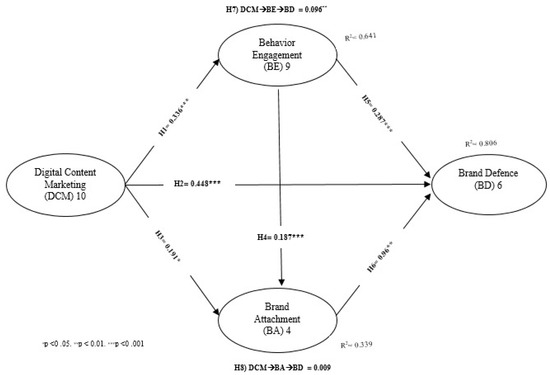
Marketers are increasingly interested in digital content marketing (DCM) strategies that have the potential to enhance consumer behaviour. However, there is a dearth of academic research that delves into the impact of DCM on brand defence. This study aims to investigate the impact of DCM on brand defence through behavioural engagement and brand attachment (in a Jordanian fashion industry case study). The results demonstrate a notable benefit of the direct effect of DCM on behavioural engagement, brand attachment, and brand defence. DCM is the strongest determinant of brand defence, followed by behavioural engagement and brand attachment. Behavioural engagement exerts a substantial beneficial impact on brand attachment. The results of this research indicate that both behavioural engagement and brand attachment significantly influence brand defence. The mediation results indicate that brand attachment fails to mediate the positive impact of DCM on brand defence. Moreover, the study determines that behavioural engagement mediates the positive impact of DCM on brand defence. This study is of high importance for marketing strategies, emphasising the pivotal importance of DCM in developing effective marketing approaches.
Full article
(This article belongs to the Section Organizational Behavior)
►▼
Show Figures

Figure 1
Open AccessArticle
The Predicting Abilities of Social Trust and Good Governance on Economic Crisis Duration
by
Jessica Nguyen, Tue Dinh and Marcus Selart
Adm. Sci. 2025, 15(4), 123; https://doi.org/10.3390/admsci15040123 - 26 Mar 2025
Abstract
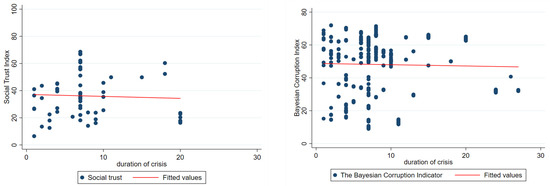
In all successful economic societies, trust is a unity factor. By contrast, the absence of trust leads to poor economic performance and negative social implications. In this paper, we uncover the relationships among social trust, corruption, and the duration of economic crises. Our
[...] Read more.
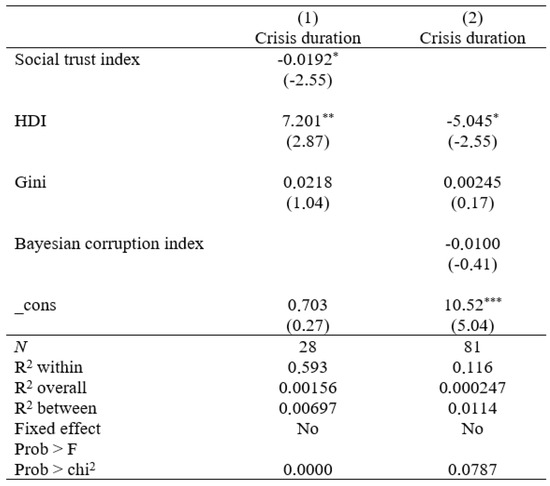
In all successful economic societies, trust is a unity factor. By contrast, the absence of trust leads to poor economic performance and negative social implications. In this paper, we uncover the relationships among social trust, corruption, and the duration of economic crises. Our theoretical foundation is based on a collection of studies from different academic fields, especially political science, sociology, and economics. We test two hypotheses: Hypothesis 1: Social trust has a negative correlation with the duration time of an economic crisis. Hypothesis 2: Corruption has a positive correlation with the duration time of an economic crisis. Our study is based on two methods: descriptive and econometric analysis. As a first step, we perform a descriptive analysis on a dataset including social trust, corruption, and economic crisis as variables. As a second step, we apply econometric techniques to analyse our data. For the hypotheses, we introduce a multiple regression with control variables. Our dataset includes 11,364 observations distributed across 211 countries. The quantitative findings support Hypothesis 1 suggesting that, as the duration of economic crises increases, social trust declines. Similarly, when the duration of the economic crisis decreases, social trust increases. Hypothesis 2 was rejected. Connecting our theoretical stance with the empirical evidence, we propose several possible explanations for the findings and provide both theoretical and practical implications.
Full article
(This article belongs to the Special Issue Current Challenges in Strategy and Public Policy)
►▼
Show Figures

Figure 1
Open AccessArticle
India’s Entrepreneurial Awakening: Navigating Geopolitical Shifts and Domestic Policy Reforms
by
Ramesh Soni, Kurt Schimmel, Frederick Slack and Jeananne Nicholls
Adm. Sci. 2025, 15(4), 122; https://doi.org/10.3390/admsci15040122 - 25 Mar 2025
Abstract
This paper examines the intersection between entrepreneurship government policy and managerial theory. The context chosen for this study is India. India has experienced a significant global geopolitical shift that is coinciding with India’s domestic policy reforms and notable domestic initiatives. Since 2014, India’s
[...] Read more.
This paper examines the intersection between entrepreneurship government policy and managerial theory. The context chosen for this study is India. India has experienced a significant global geopolitical shift that is coinciding with India’s domestic policy reforms and notable domestic initiatives. Since 2014, India’s entrepreneurial ecosystem has seen a significant increase in the number of startups and unicorns. This paper presents arguments that the confluence of global realignments, such as the diversification of supply chains away from China and increasing interest in the Indo-Pacific region, along with domestic initiatives like “Make in India”, “Startup India”, and digitalization drives, along with massive investments in infrastructure improvements, have made India a desirable destination for entrepreneurial activity. By examining these factors through the lens of three theories—resource-based view, global value chain, and innovation ecosystem theory—this paper identifies key opportunities and challenges for entrepreneurs across various sectors. It is hoped that this research will contribute to a deeper understanding of India’s evolving entrepreneurial landscape. In addition, entrepreneurs, policymakers, and investors can benefit from this article to understand the opportunities and challenges India poses in order to contribute to India’s continued economic growth and its emergence as a global entrepreneurial powerhouse. Finally, this paper helps to bridge the gap between economic policy and management theory.
Full article
(This article belongs to the Special Issue Strategic Management and Entrepreneurship in the Time of Societal Disruptions)
►▼
Show Figures

Figure 1
Open AccessArticle
Corporate Social Responsibility’s Influence on Brand Image in the Automotive Sector: The Corporate Reputation and Product Quality Role
by
Mohsen Brahmi, Zahid Hussain, Muhammad Ussama Majeed, Arman Khan, Muhammad Asif Qureshi and Rohit Bansal
Adm. Sci. 2025, 15(4), 121; https://doi.org/10.3390/admsci15040121 - 25 Mar 2025
Abstract
This study investigates the impact of perceived corporate social responsibility (CSR) on brand image within the automotive industry. It also examines how company reputation (CR) and product quality (PQ) mediate the relationship between CSR and brand image (BI). Utilizing a sample of 243
[...] Read more.
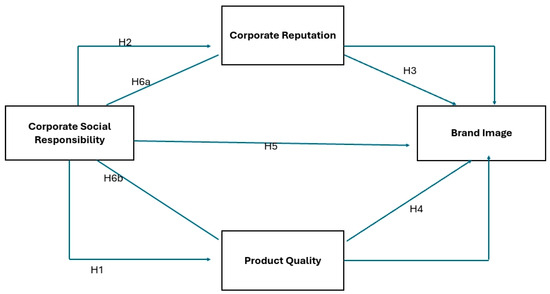
This study investigates the impact of perceived corporate social responsibility (CSR) on brand image within the automotive industry. It also examines how company reputation (CR) and product quality (PQ) mediate the relationship between CSR and brand image (BI). Utilizing a sample of 243 clients from the Pakistani automotive sector, data were collected through a survey and analyzed using structural equation modeling (SEM) with AMOS version 24.0. The results indicate that perceived CSR positively influences brand image, with both company reputation and product quality acting as significant mediators. This underscores the importance of CSR initiatives for enhancing brand image. The findings have significant implications for auto manufacturers, highlighting the need to integrate CSR into their strategic brand management to improve company reputation, product quality, and, ultimately, brand image. This study expands the conventional understanding of CSR’s impact on consumer perceptions and addresses a critical gap in the literature.
Full article
(This article belongs to the Special Issue Sustainability in Corporate Governance: Strategy, Practice and Prospect)
►▼
Show Figures

Figure 1
Open AccessArticle
Optimising Retail Environments for Older Adults: Insights into Customer Behaviour and Organisational Performance
by
Ljerka Sedlan König
Adm. Sci. 2025, 15(4), 120; https://doi.org/10.3390/admsci15040120 - 24 Mar 2025
Abstract
Retailers have traditionally prioritised younger customers, often overlooking the distinct needs of older consumers. As this demographic grows, it is increasingly important to cater to their shopping preferences. This study explores the behaviours, needs, and challenges of Croatian consumers aged 60+ through qualitative
[...] Read more.
Retailers have traditionally prioritised younger customers, often overlooking the distinct needs of older consumers. As this demographic grows, it is increasingly important to cater to their shopping preferences. This study explores the behaviours, needs, and challenges of Croatian consumers aged 60+ through qualitative semi-structured interviews. Findings indicate that older urban customers in Croatia prioritise quality over price, are brand-loyal yet discerning, and balance price consciousness for necessities with the willingness to spend on desired items. The study contributes to consumer behaviour theory by highlighting older consumers’ selective brand loyalty and self-directed decision making. It expands on ageing population theories by challenging assumptions that older consumers are passive shoppers, emphasising their preference for informed, self-directed purchasing. From a retail strategy perspective, it emphasises experience-based retailing, advocating for enhanced customer service, clear store navigation, and tailored marketing. Practically, our research provides actionable insights for retailers to optimise service, enhance operational efficiency, and improve profitability. Adapting retail environments to better serve older customers can foster a more engaging and rewarding shopping experience, benefiting both consumers and businesses.
Full article
Open AccessArticle
Impact of Leader Behavior on Employee Experience and Job Satisfaction in Educational Institutions
by
Elizabeth Emperatriz García-Salirrosas, Felipe Eduardo Yong-Chung, Ralphi Ricardo Jauregui-Arroyo, Manuel Escobar-Farfán and Ángel Acevedo-Duque
Adm. Sci. 2025, 15(4), 119; https://doi.org/10.3390/admsci15040119 - 23 Mar 2025
Abstract
Given the relevance of leadership in the educational environment, there is a need to identify the key elements that influence teacher well-being. Therefore, the present study addresses the impact of leader behavior, specifically initial structure and consideration, on employee experience and job satisfaction
[...] Read more.
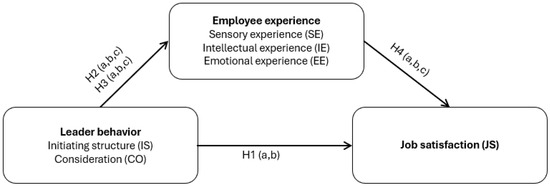
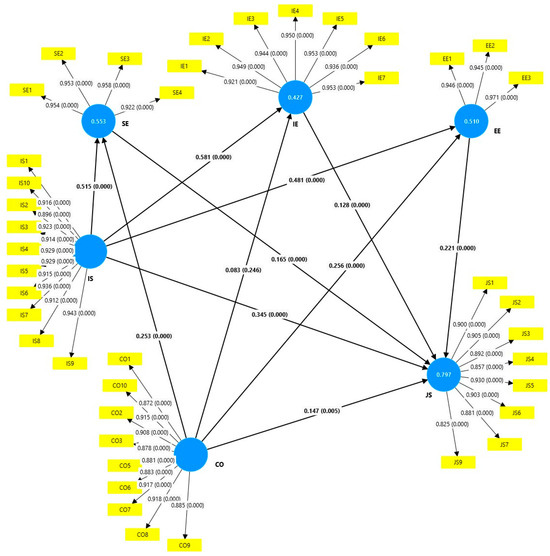
Given the relevance of leadership in the educational environment, there is a need to identify the key elements that influence teacher well-being. Therefore, the present study addresses the impact of leader behavior, specifically initial structure and consideration, on employee experience and job satisfaction in Peruvian educational institutions. The research included a sample of 651 regular basic education teachers in Peru and used a structural equation model using PLS-SEM to evaluate the hypotheses. The following were measured: three dimensions of the employee experience: sensorial, intellectual, and emotional, using validated and reliable instruments. The results indicated that the initial structure positively impacts the three dimensions of the employee experience, while consideration significantly influences the sensorial and emotional experiences but not the intellectual ones. Likewise, it was proven that the three dimensions of the employee experience positively impact job satisfaction. It is concluded that effective leadership, which combines structural clarity and emotional support, improves the work environment and increases staff satisfaction. Finally, implementing leadership training programs is suggested to strengthen these competencies in educational leaders.
Full article
(This article belongs to the Topic Leadership and Employee Well-Being: Fostering a Healthy Work Environment)
►▼
Show Figures

Figure 1
Open AccessArticle
What Are Industry 4.0 and Industry 5.0 All About? An Integrative Institutional Model for the New Industrial Paradigms
by
Diego Rorato Fogaça, Mercedes Grijalvo and Mario Sacomano Neto
Adm. Sci. 2025, 15(4), 118; https://doi.org/10.3390/admsci15040118 - 22 Mar 2025
Abstract
►▼
Show Figures
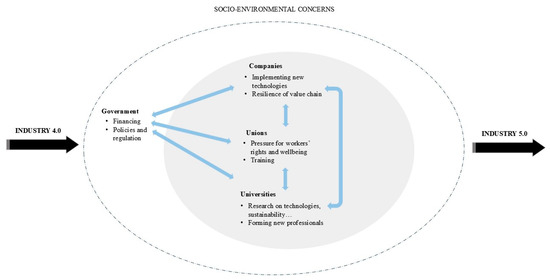
Industry 4.0 (I4.0) and Industry 5.0 (I5.0) represent important changes in industrial paradigms. I4.0 is centered on efficiency and competitiveness, and I5.0 adds sustainability, human-centricity, and resilience to the framework. Despite their growing relevance, much of the existing research remains techno-centric, neglecting the
[...] Read more.
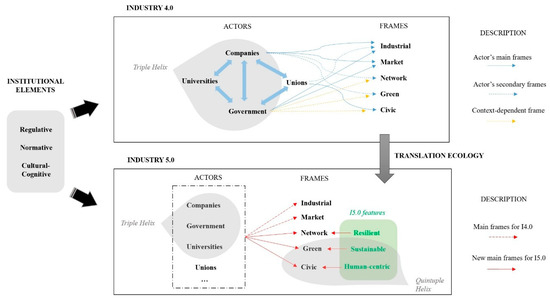
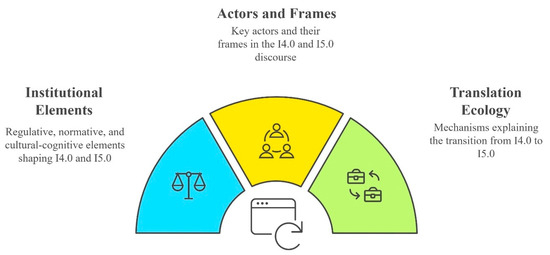
Industry 4.0 (I4.0) and Industry 5.0 (I5.0) represent important changes in industrial paradigms. I4.0 is centered on efficiency and competitiveness, and I5.0 adds sustainability, human-centricity, and resilience to the framework. Despite their growing relevance, much of the existing research remains techno-centric, neglecting the sociocultural and institutional forces shaping them. This study investigates how the transition from I4.0 to I5.0 is occurring using an institutional perspective. A qualitative methodology was employed, combining theoretical synthesis and secondary data analysis to develop an integrative model. The proposed model draws on insights from Institutional Theory, Scandinavian Institutionalism, Management Fashion, and Quintuple Helix, emphasizing the role of translation and diffusion in institutionalizing these paradigms. We maintain that both of them are fundamentally discursive, shaped by institutional pressures, shared meanings, and stakeholder interactions. I4.0 already allows for a heterogeneous vision adjusted to different perspectives and stakeholders. I5.0 goes further by responding to criticism about social and environmental issues and introducing resilience, especially after the COVID-19 pandemic and the ongoing climate crisis. As a result, I5.0 aligns with a broader range of actors and interests, increasing its potential for widespread acceptance and long-term impact. This research challenges deterministic views of technology, arguing that this new industrial revolution is not eminently technology-driven but instead emphasizes the central role of discourse and institutional processes in shaping its development.
Full article

Figure 1
Open AccessArticle
The Impact of User-Generated Content on Tourist Visit Intentions: The Mediating Role of Destination Imagery
by
Khaled M. Aboalganam, Sakher Faisal AlFraihat and Saeed Tarabieh
Adm. Sci. 2025, 15(4), 117; https://doi.org/10.3390/admsci15040117 - 22 Mar 2025
Abstract
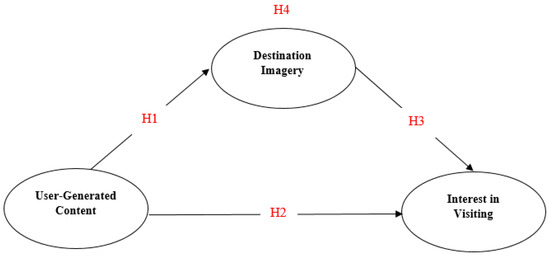
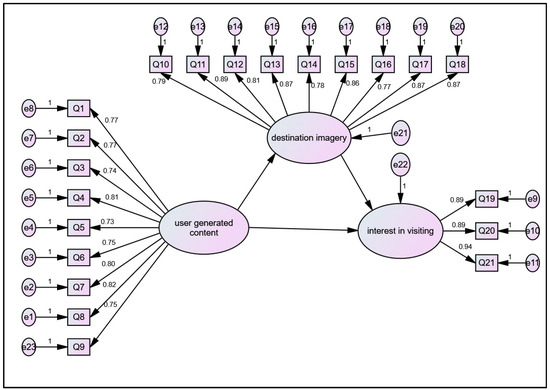
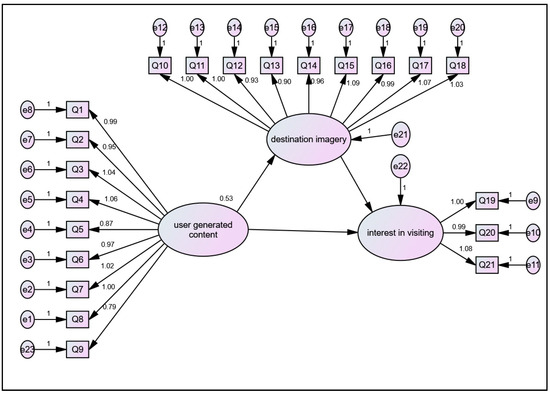
This study seeks to investigate the influence of user-generated content (UGC) on tourist visit intentions. This study also aims to explore the mediating role of destination imagery in the relationship between UGC and tourist visit intentions. The findings show that UGC has a
[...] Read more.
This study seeks to investigate the influence of user-generated content (UGC) on tourist visit intentions. This study also aims to explore the mediating role of destination imagery in the relationship between UGC and tourist visit intentions. The findings show that UGC has a significant positive effect on destination imagery and tourist visit intentions. Additionally, destination imagery has a significant positive effect on tourist visit intentions. The mediation analysis results revealed that destination imagery mediates the positive impact of UGC on tourist visit intentions, highlighting its crucial role in shaping tourist behavior. These findings have significant implications for marketing strategies, emphasizing UGC as a key tool for generating compelling destination narratives and increasing tourist engagement. This study contributes to the expanding body of knowledge on digital content’s function in tourist marketing and provides meaningful guidance for industry practitioners.
Full article
(This article belongs to the Special Issue Innovations in Sustainable Tourism: Shaping the Future of Destinations)
►▼
Show Figures

Figure 1
Open AccessArticle
Cultural Dynamics and Ambidextrous Innovation: Insights from Saudi Arabia’s Project-Based Organizations—A Thematic–Explorative Study
by
Mohammad AlSaied, Patrick McLaughlin, Mohamed Afy-Shararah, John Patsavellas and Abdullah Alkhoraif
Adm. Sci. 2025, 15(4), 116; https://doi.org/10.3390/admsci15040116 - 21 Mar 2025
Abstract
The implementation of ambidextrous innovation in project organizations within the cultures of the Global South, such as Saudi Arabia, is a significant problem. Organizational culture is positioned as a key factor that can help project organizations in cultures such as Saudi Arabia to
[...] Read more.
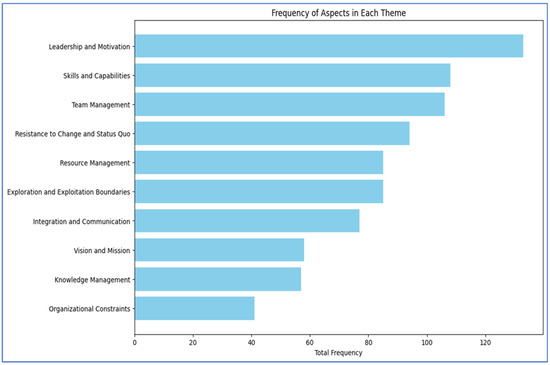
The implementation of ambidextrous innovation in project organizations within the cultures of the Global South, such as Saudi Arabia, is a significant problem. Organizational culture is positioned as a key factor that can help project organizations in cultures such as Saudi Arabia to implement ambidexterity as a key innovation framework. However, knowledge of ambidextrous innovations in such an important cultural and organizational context is highly limited. Thus, the aim of the present research is to explore key cultural aspects and themes based on action and a grounded theory research approach that can help organizations employ projects as a key work structure to implement ambidextrous innovations in project management offices (PMOs) in Saudi Arabia. To achieve this aim, the current study employed in-depth semi-structured interviews with 36 participants. The results, employing open coding procedures as a tool of data analysis using the NVivo 14.0 software package, revealed 62 key cultural aspects that can be critical in implementing the innovation of ambidexterity. To further validate and triangulate the findings, inter-rater reliability was undertaken with the help of two experts, and two sessions of focus group discussions were also conducted. The first session of the focus group helped us critically evaluate and filter the cultural aspects, resulting in the final 56 key cultural aspects. The second focus group session was undertaken with participants with the aim of grouping aspects into theoretical themes, which resulted in 10 themes. The research is novel in that it addresses both project organizations and the culture of the Global South, including Saudi Arabia. Empirical research needs to be conducted to predict and achieve other key outcomes.
Full article
(This article belongs to the Special Issue Innovation Management of Organizations in the Digital Age)
►▼
Show Figures

Figure 1
Highly Accessed Articles
Latest Books
E-Mail Alert
News
Topics
Topic in
Administrative Sciences, Businesses, Behavioral Sciences, JTAER
Interactive Marketing in the Digital Era
Topic Editors: Chenglu Wang, Jiaxun He, Fue Zeng, Rui Guo, Morgan Yang, Andy Hao, Hongfei LiuDeadline: 26 June 2025
Topic in
Administrative Sciences, IJERPH
Leadership and Employee Well-Being: Fostering a Healthy Work Environment
Topic Editors: Muhammad Asif, Faiza ManzoorDeadline: 31 August 2025
Topic in
Administrative Sciences, Businesses, Sustainability
Challenges and Future Trends of Digital and Sustainable Marketing and Consumer Choices
Topic Editors: Myriam Ertz, Leyla Jaoued, Tian Zeng, Imen Latrous, Urvashi Tandon, Shouheng Sun, Muhammed Sajid, Muhammad Yaseen BhuttoDeadline: 30 November 2025
Topic in
Administrative Sciences, Businesses, Economies, IJERPH, JRFM, Risks, Systems
Risk Management in Public Sector
Topic Editors: Matthias Beck, Andrew WattersonDeadline: 30 December 2025
Conferences
Special Issues
Special Issue in
Administrative Sciences
Rethinking Strategic Alliances: Innovations, Challenges, and Insights
Guest Editor: Bernard SimoninDeadline: 15 April 2025
Special Issue in
Administrative Sciences
Challenges and Future Trends of Tourism Management
Guest Editors: Camelia Oroian, Iulia Cristina Muresan, Ioan OroianDeadline: 30 April 2025
Special Issue in
Administrative Sciences
Government in the Digital Society: Shaping Civil Participation Through Technologies to Increase Personalization, Engagement and Action
Guest Editors: Darren Mundy, Mona ArslanDeadline: 15 May 2025
Special Issue in
Administrative Sciences
Building a Resilient Workforce: Strategies for Promoting Mental and Physical Health at Work
Guest Editors: Kavitha Haldorai, Souji Gopalakrishna PillaiDeadline: 31 May 2025