

Journal Description
Genealogy
Genealogy
is an international, scholarly, peer-reviewed, open access journal devoted to the analysis of genealogical narratives (with applications for family, race/ethnic, gender, migration and science studies) and scholarship that uses genealogical theory and methodologies to examine historical processes. The journal is published quarterly online by MDPI.
- Open Access— free for readers, with article processing charges (APC) paid by authors or their institutions.
- High Visibility: indexed within Scopus, ESCI (Web of Science), and many other databases.
- Rapid Publication: manuscripts are peer-reviewed and a first decision is provided to authors approximately 29.9 days after submission; acceptance to publication is undertaken in 4.9 days (median values for papers published in this journal in the second half of 2024).
- Recognition of Reviewers: reviewers who provide timely, thorough peer-review reports receive vouchers entitling them to a discount on the APC of their next publication in any MDPI journal, in appreciation of the work done.
Impact Factor:
0.8 (2023)
Latest Articles
From Mortal Sins to Individual Pride: Transformations of Sexually Motivated Crimes in the Czech Lands from the Middle Ages to the Present
Genealogy 2025, 9(2), 40; https://doi.org/10.3390/genealogy9020040 - 4 Apr 2025
Abstract
The legal and social perception of sexually motivated crimes has undergone profound transformations in the Czech lands from the Middle Ages to the present. Acts once considered grave moral transgressions, punishable by death, have been gradually decriminalised or even integrated into the realm
[...] Read more.
The legal and social perception of sexually motivated crimes has undergone profound transformations in the Czech lands from the Middle Ages to the present. Acts once considered grave moral transgressions, punishable by death, have been gradually decriminalised or even integrated into the realm of personal identity and cultural self-expression. This article examines the evolving legal frameworks and societal attitudes towards such offences, with a particular focus on their implications for family structures, inheritance rights, and genealogical continuity. By analysing historical judicial records—primarily early modern pitch books—alongside contemporary legislation, we highlight the shifting boundaries between crime, morality, and individual rights. Methodologically, this study combines a historical–legal analysis with comparative criminology to elucidate the changing regulatory mechanisms governing sexual behaviour. The findings illustrate that, while legal norms have progressively moved away from religious morality toward individual freedoms, some taboos persist, reflecting enduring social anxieties. The Czech case serves as a model for broader European trends, offering valuable insights into the interplay between law, social norms, and genealogical structures across different historical periods.
Full article
Open AccessArticle
Cosmopolitan Belonging and Third Space: An Ethnographic Study of the Durham Bubble Tea Society as a Site of Cultural Identity and Transnational Belonging
by
Xinwei Zhang
Genealogy 2025, 9(2), 39; https://doi.org/10.3390/genealogy9020039 - 3 Apr 2025
Abstract
This ethnographic study explores the Durham Bubble Tea Society as a site of cultural identity and transnational belonging among university students. Through qualitative data collection, including interviews and questionnaires, this research investigates why students feel the need to establish a society centered around
[...] Read more.
This ethnographic study explores the Durham Bubble Tea Society as a site of cultural identity and transnational belonging among university students. Through qualitative data collection, including interviews and questionnaires, this research investigates why students feel the need to establish a society centered around bubble tea, a drink with deep cultural resonance in East Asia but also a globalized product. The study identifies three overarching themes: maintaining original lifestyles amid transnational mobility, cosmopolitan aspirations and the symbolism of bubble tea, and the hybrid space of the Bubble Tea Society. These themes highlight how the society functions as a third space, bridging cultural divides and fostering transcultural connections. The findings contribute to broader theoretical discussions on transnational identity, cosmopolitan belonging, and the role of cultural artifacts in shaping globalized identities. This study underscores the importance of third spaces in fostering inclusivity and understanding, emphasizing the need for critical engagement with cultural symbols to ensure authentic cosmopolitan belonging.
Full article
(This article belongs to the Special Issue Exploring Identity, Belonging, and Transnationalism among Migrants in Europe)
Open AccessArticle
The Science of Crowds: A Genealogical Analysis of Gustave Le Bon’s Collective Psychology
by
Damiano Palano
Genealogy 2025, 9(2), 38; https://doi.org/10.3390/genealogy9020038 - 1 Apr 2025
Abstract
This article examines Gustave Le Bon’s thinking, focusing in particular on the aspects most closely connected to the search for the “laws” of the rise and fall of civilizations. Indeed, throughout his intellectual career, Le Bon cultivated the ambition of providing a credible
[...] Read more.
This article examines Gustave Le Bon’s thinking, focusing in particular on the aspects most closely connected to the search for the “laws” of the rise and fall of civilizations. Indeed, throughout his intellectual career, Le Bon cultivated the ambition of providing a credible answer to the problem of French decadence. In other words, he tried to become a kind of “Machiavelli of the age of crowds”. This article argues that this political objective affected Le Bon’s theory and his psychology of crowds. Since he wanted to make his political recipes appear credible to the elites of the Third Republic, he had to modify his theoretical architecture on nonsecondary points. He managed to hide the inconsistencies under the veil of effective rhetoric but, in retrospect, one can easily recognize that, in his theory, he uses three different ideas of the unconscious to explain the behavior of crowds, peoples, and “races”.
Full article
Open AccessArticle
Ethnic Tensions and National (In)Stability in Ethiopia: Analyzing Risks of Ethnic Cleansing
by
Amsalu K. Addis
Genealogy 2025, 9(2), 37; https://doi.org/10.3390/genealogy9020037 - 28 Mar 2025
Abstract
This study analyses the ethnic cleansing of the Amhara people, which began during the late TPLF-led EPRDF regime and has continued under Abiy Ahmed’s administration. Despite the severity of these attacks, the Amhara’s plight has been largely ignored. Utilizing primary data from a
[...] Read more.
This study analyses the ethnic cleansing of the Amhara people, which began during the late TPLF-led EPRDF regime and has continued under Abiy Ahmed’s administration. Despite the severity of these attacks, the Amhara’s plight has been largely ignored. Utilizing primary data from a survey of 183 Ethiopians and secondary data from various sources, the research takes a mixed-methods approach to explore factors contributing to these ethnic-based identity attacks. Findings indicate rising concerns about security, historical grievances, and regional inequalities, highlighting the urgent need for dialogue and inclusive policies to restore national unity and social cohesion. The findings also signify a decline in national unity, with ethnic identity becoming increasingly pronounced amid growing distrust of the central government.
Full article
Open AccessArticle
Ancestral Parenting: Reclaiming Māori Childrearing Practices in the Wake of Colonial Disruption
by
Joni Māramatanga Angeli-Gordon
Genealogy 2025, 9(2), 36; https://doi.org/10.3390/genealogy9020036 - 27 Mar 2025
Abstract
This article investigates the colonial disruption of Māori parenting practices and its enduring effects on Indigenous identity and belonging. It explores how colonisation imposed Western parenting models, disrupting communal caregiving, and severing connections to whakapapa (ancestry) and whenua (land). Grounded in Kaupapa Māori
[...] Read more.
This article investigates the colonial disruption of Māori parenting practices and its enduring effects on Indigenous identity and belonging. It explores how colonisation imposed Western parenting models, disrupting communal caregiving, and severing connections to whakapapa (ancestry) and whenua (land). Grounded in Kaupapa Māori methodologies, this research highlights pre-colonial parenting, attachment, and child development practices, demonstrating their alignment with contemporary child development theories and their potential to address intergenerational trauma. Drawing on oral literature, archival records, and studies, this paper proposes a framework for restoring ancestral parenting principles. It emphasises the importance of these practices in rebuilding cultural confidence, enhancing child wellbeing, and strengthening whānau relationships. By integrating ancestral principles into trauma-informed care, attachment-based parenting models, and culturally affirming teaching, the article envisions pathways for healing and resilience in Māori communities, contributing to broader Indigenous resurgence.
Full article
(This article belongs to the Special Issue Interrogating the Impact of Colonialism(s) on Indigenous Identity, Being, and Belonging)
Open AccessArticle
On Ethnoerotism in Cross-Cultural Perspective: Mythology, Poetics, and National Genesis in Latin America, Romania, and Ancient Rome
by
Gheorghiță Geană
Genealogy 2025, 9(2), 35; https://doi.org/10.3390/genealogy9020035 - 27 Mar 2025
Abstract
►▼
Show Figures
The term “ethnoerotism” is advanced for expressing the attraction and union between two ethnic groups placed under the gender symbols—male and female—that contribute, with their specific energies, to the genesis of a new people or nation. By using some concepts as “myth” and
[...] Read more.
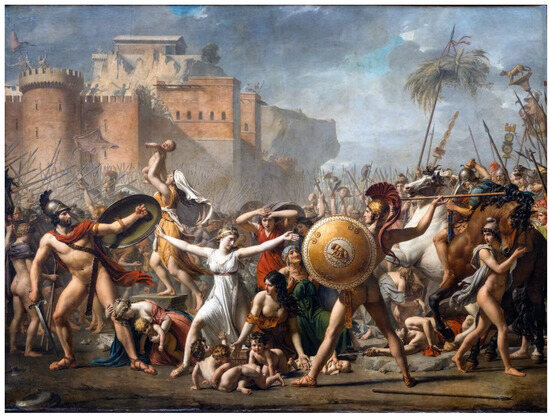
The term “ethnoerotism” is advanced for expressing the attraction and union between two ethnic groups placed under the gender symbols—male and female—that contribute, with their specific energies, to the genesis of a new people or nation. By using some concepts as “myth” and “ethnosymbolism”, this outlook regarding the origin of nations is exemplified by Natividad Gutiérrez (with the descent of nations in Latin America), Vasile Pârvan (with a poem in prose about the genesis of the Romanian people), and Titus Livius and Plutarch (with the abduction of Sabine women after the founding of ancient Rome). These cases are presented in the framework of a vision about the “diachronic dimension of national identity” (Geană 2016). It also should be mentioned that (at least in the Romanian case) such a vision regarding ethnic genesis and continuity in time is passed on from generation to generation by a vivid folk tradition, as well as, in modern times, by the official system of education.
Full article

Figure 1
Open AccessArticle
Tracing an Archive: The Mackintosh Archive in Familial and Colonial Context
by
Onni Gust
Genealogy 2025, 9(2), 34; https://doi.org/10.3390/genealogy9020034 - 26 Mar 2025
Abstract
This article focuses on the genealogy of the Mackintosh archive, showing how subjects are interpellated through archival networks that span imperial and metropolitan sites, linking people, ideas, knowledge and material resources. By tracing the Mackintosh archive across generations of family members embedded in
[...] Read more.
This article focuses on the genealogy of the Mackintosh archive, showing how subjects are interpellated through archival networks that span imperial and metropolitan sites, linking people, ideas, knowledge and material resources. By tracing the Mackintosh archive across generations of family members embedded in British imperial society, it shows how archives call forth an individual—Sir James Mackintosh—as a symbol and a site of the interconnections between the patriarchal family, the male-dominated state and the production of cultural imaginaries of belonging. Tracing this archive, it argues that the ‘society’ to which James Mackintosh belonged is both reflected in, and constituted through, the letters and journals that comprise his archive. In form and content, they provide the material evidence for the interconnectedness of social, familial, intellectual and political lives. They function both as fantasies and representations of belonging to a social network—a community—and a constitutive part of the consolidation of that network. The letters and diaries that comprise the Mackintosh Archive bear witness to the formation of a literary elite at the turn of the nineteenth century and the mobility of that elite around European-imperial space. Thus, the Mackintosh Archive illustrates the point, made by an increasing number of imperial and global historians, that ideas and identities were forged through inter-connections across space.
Full article
(This article belongs to the Special Issue Colonial Intimacies: Families and Family Life in the British Empire)
Open AccessArticle
“And Then One Day, Me and My Husband, We Learned How to Cross the Street”: Hazara Women’s Experiences in Sydney and Yearnings for ‘Home’
by
Rimple Mehta, Linda Briskman, Michel Edenborough, Fran Gale, Samantha Tom Cherian, Mohammad Arif Nabizadah, Jasmina Bajraktarevic-Hayward and Asma Naurozi
Genealogy 2025, 9(2), 33; https://doi.org/10.3390/genealogy9020033 - 24 Mar 2025
Abstract
As numbers of displaced people throughout the world steadily increase with the rise in global conflicts, many Western nations, including Australia, increasingly thwart asylum-seeking and place harsh restrictions on entry. Nonetheless, Afghanistan’s troubled political history over several decades has generated steady movement of
[...] Read more.
As numbers of displaced people throughout the world steadily increase with the rise in global conflicts, many Western nations, including Australia, increasingly thwart asylum-seeking and place harsh restrictions on entry. Nonetheless, Afghanistan’s troubled political history over several decades has generated steady movement of refugees to Australia, and Australia has offered protection, although often conditional and limited. Little is known about the experiences of women who fled, giving up their homes, professions, education, extended family, and social lives that were rich in connection. Despite expanding research and literature, there are still gaps in what is known about what happens to refugee women who resettle in Australia. The research outlined in this article uncovers the stories of six Afghan women, highlighting their agency to counter stereotypes. The article focuses not only on losses experienced, but ways in which this group of Hazara women negotiated their way in their new home of Australia, with the support of STARTTS, a not-for-profit organisation. Some of the initial barriers to resettlement in Australia involved accessible and timely information, limited proficiency in English, and comprehending laws and norms. The ongoing effects of trauma along with these barriers often accelerated the ageing process for these women, limiting their ability as well as opportunity for employment. These barriers were exacerbated in the context of the yearnings for their homeland and loved ones who were still in Afghanistan. Women were torn between feelings of gratitude for their own security and of guilt and pain for those in Afghanistan. Through STARTTS-facilitated groups, women found opportunities to connect with one another. They also used these connections to gather information about support programs, for themselves or their families, crucial for them to reconstruct their lives in Australia. For refugees experiencing dislocation, the formation of social networks in the host country contributes to belonging and connectedness and facilitates rebuilding trusting relationships that have been intentionally destroyed, where they can share their experiences in a safe, trauma-informed environment.
Full article
(This article belongs to the Special Issue Mobilities and Precarities)
Open AccessArticle
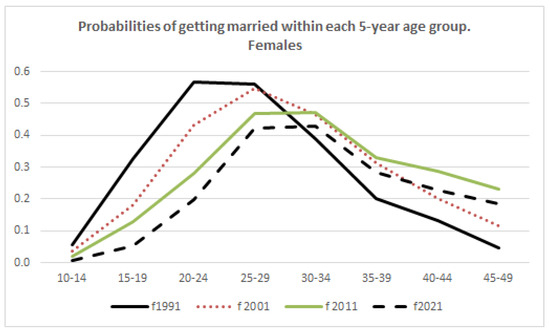
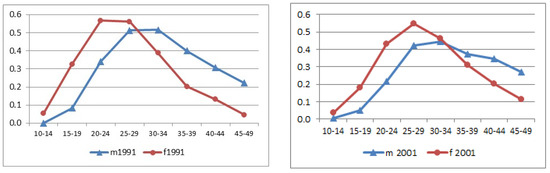
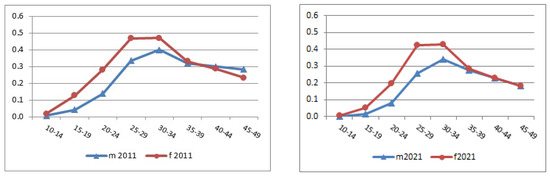
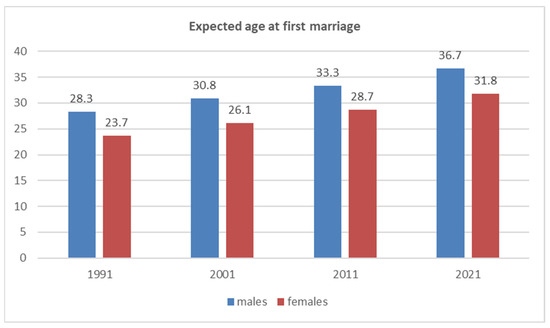
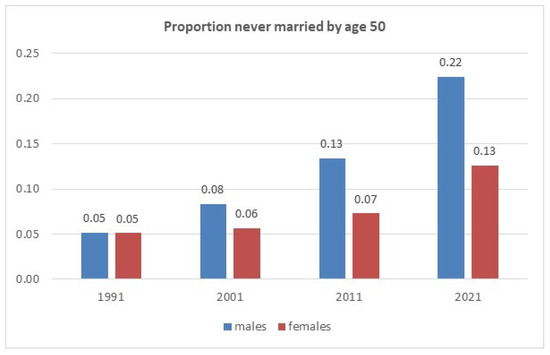
The Marriage Behavior of the Greek Population from 1991 to 2021: A Study Through Gross Nuptiality Tables
by
Vasilis S. Gavalas
Genealogy 2025, 9(2), 32; https://doi.org/10.3390/genealogy9020032 - 24 Mar 2025
Abstract
►▼
Show Figures
One of the most refined tools that have been devised for the analysis of marriage behavior of a population is the nuptiality tables. There are two main categories of such tables: gross and net. The latter (net tables) are primarily used for the
[...] Read more.
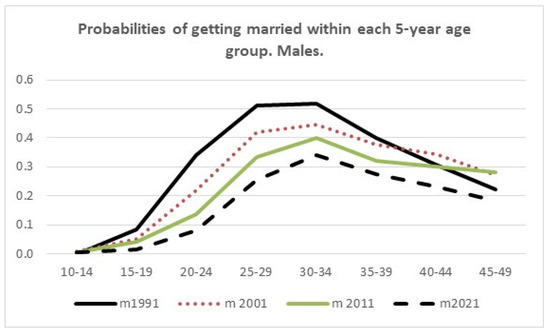
One of the most refined tools that have been devised for the analysis of marriage behavior of a population is the nuptiality tables. There are two main categories of such tables: gross and net. The latter (net tables) are primarily used for the study of reproduction in natural fertility populations, while the former (gross tables) are more suitable for comparing nuptiality among several populations, as differences in net tables may be due to differences either in mortality or in nuptiality or to an unknown mixture of both. In what follows, gross, abridged, period nuptiality tables have been constructed for the single population of Greece for four time points: 1991, 2001, 2011, and 2021. A significant decline in nuptiality was observed during the thirty-year period, with the age pattern of marriage being different by sex. While spinsters nowadays (2021) are more likely to marry at old ages (especially at ages above 40) than ever in the past, this is not the case for bachelors anymore. For a bachelor in Greece, the probabilities of marrying are lower in every age group than ever in the last 30 years.
Full article

Figure 1
Open AccessArticle
“They’re Only a Quarter”: A Duoethnographic Exploration of Multiracial Fatherhood
by
Jacob P. Wong-Campbell and Brendon M. Soltis
Genealogy 2025, 9(2), 31; https://doi.org/10.3390/genealogy9020031 - 23 Mar 2025
Abstract
In this duoethnography, we examine our own experiences of multiracial fatherhood to disrupt metanarratives about race, multiraciality, and privilege. By synthesizing critical multiracial theory and critical race parenting, we advance three propositions of critical multiracial parenting to attend to the permanence of (mono)racism,
[...] Read more.
In this duoethnography, we examine our own experiences of multiracial fatherhood to disrupt metanarratives about race, multiraciality, and privilege. By synthesizing critical multiracial theory and critical race parenting, we advance three propositions of critical multiracial parenting to attend to the permanence of (mono)racism, the shifting salience of multiraciality across time and space, and the possibilities of expansive pedagogical approaches to challenge racial rigidity. We weave together and disrupt each other’s narratives by presenting two scenes of multiracial fatherhood, complicating our understanding and assumptions of White privilege, multiracial identity, and generational proximity to an interracial union. Our hope is that our duoethnography is not a beginning nor an end; rather, we call on readers to continually add their voices to disrupt and complicate how whiteness works in family systems and multiraciality discourses.
Full article
(This article belongs to the Special Issue The Manifestation and Contestation of White Privilege in Multiracial Families)
Open AccessArticle
Ngā Kare-ā-Roto: Māori Cultural Understandings and Emotional Expression
by
Leonie Pihama, Jenny Lee-Morgan, Rangi Matamua, Hineitimoana Greensill and Papahuia Dickson
Genealogy 2025, 9(2), 30; https://doi.org/10.3390/genealogy9020030 - 21 Mar 2025
Abstract
This article ‘Ngā Kare-ā-roto: The Ripples Within’ provides an overview of findings related to Māori views, understanding and expressions of emotions through a Māori cultural lens. One of the key findings from the research project ‘Ngā Kare-ā-roto’ highlighted that emotions are expressed through
[...] Read more.
This article ‘Ngā Kare-ā-roto: The Ripples Within’ provides an overview of findings related to Māori views, understanding and expressions of emotions through a Māori cultural lens. One of the key findings from the research project ‘Ngā Kare-ā-roto’ highlighted that emotions are expressed through a range of cultural practices that have served to bring collective understandings to support emotional wellbeing for Māori. At the centre of this research is the revitalisation of ancestral knowledge and practices to support emotional expression. The social and cultural significance of this project is highlighted by Indigenous researchers who have noted the direct relationship of emotions such as grief and trauma to wellbeing. This article provides an outline of kaikōrero (speakers/participants) views on the place of whakataukī (proverbial sayings) in the expression of emotions and emotional states of being. We begin with an overview of the significance of this work to supporting wellbeing and healing. We then move to providing a range of examples that were shared throughout the project that give insights into the ways in which emotions for Māori are framed within our ancestral and cultural understandings, in particular in regards to collective expressions of tikanga (cultural practices) and whakataukī that have been handed down through te reo Māori (Māori language) as sources of knowledge, guidance and learning.
Full article
(This article belongs to the Section Genealogical Communities: Community History, Myths, Cultures)
Open AccessArticle
Navigating Belonging While Experiencing Discrimination: Migrant Women’s Aspirations in Norway’s Labour Market
by
Amanda Miriam Tallis
Genealogy 2025, 9(1), 29; https://doi.org/10.3390/genealogy9010029 - 20 Mar 2025
Abstract
This article examines how belonging and aspirations among women with a migrant background are shaped by experiences of discrimination in the Norwegian labour market. While extensive research exists on policy implementation and public measures aimed at integrating migrants into the labour market, less
[...] Read more.
This article examines how belonging and aspirations among women with a migrant background are shaped by experiences of discrimination in the Norwegian labour market. While extensive research exists on policy implementation and public measures aimed at integrating migrants into the labour market, less focus has been placed on understanding how migrants’ work aspirations and desires are shaped. This article builds on ethnographic fieldwork conducted among migrant women in a Norwegian city. Drawing on research suggesting that migrants’ agency is influenced by actual or perceived opportunity structures, I explore how discrimination, as a distinct structural barrier, (re)shape aspirations and belonging among women with migrant backgrounds. In this article, I explore identity and belonging as dynamic and context-dependent, rather than fixed categories like gender, ethnicity, or class. The findings show that discrimination is a salient part of women’s experiences in the labour market and further illustrate how discrimination affects their sense of belonging, and their aspirations connected to work-life. Some women seek belonging in arenas other than the labour market in society, where they experience that their resources are valued.
Full article
(This article belongs to the Special Issue Exploring Identity, Belonging, and Transnationalism among Migrants in Europe)
Open AccessReview
State Thought and Migration: Analysing the Ideological Underpinnings of Temporary Migration Programmes
by
Yoan Molinero-Gerbeau
Genealogy 2025, 9(1), 28; https://doi.org/10.3390/genealogy9010028 - 18 Mar 2025
Abstract
This paper analyses temporary migration programs (TMPs) as a manifestation of the “State thought” ideology, drawing on Abdelmalek Sayad’s sociological framework. Sayad considers the State central to the migration system, shaping perceptions and practices around migration through its ideological and structural dominance. The
[...] Read more.
This paper analyses temporary migration programs (TMPs) as a manifestation of the “State thought” ideology, drawing on Abdelmalek Sayad’s sociological framework. Sayad considers the State central to the migration system, shaping perceptions and practices around migration through its ideological and structural dominance. The paper first explores how the State constructs hegemonic ideologies around migration, emphasising the dichotomy between nationals and non-nationals. TMPs epitomise these ideologies by promoting utilitarian migration systems that maximise economic benefits while minimising social integration. TMPs, such as agricultural guest worker schemes, enforce strict temporality, denying migrants permanence and full participation in host societies. Migrants are treated as disposable labour, restricted by non-transferable permits, and confined to precarious living conditions. The paper highlights the tension between the economic reliance on migrant labour and the State’s exclusionary policies, revealing TMPs as tools for controlling and exploiting migrants while maintaining national homogeneity. Ultimately, TMPs embody the pinnacle of “State thought”, balancing economic utility and sovereignty by perpetuating provisionality, exclusion, and systemic exploitation. The paper concludes by acknowledging migrants’ agency as they navigate and resist the structural constraints of TMPs to pursue personal and collective goals, challenging these programmes’ colonial and utilitarian underpinnings.
Full article
(This article belongs to the Section Genealogical Communities: Multi-Ethnic, Multi-Racial, and Multi-National Genealogies)
Open AccessArticle
The Lives of First-Generation German Immigrant Women in Franklin County, Missouri
by
Sarah Gehlert
Genealogy 2025, 9(1), 27; https://doi.org/10.3390/genealogy9010027 - 18 Mar 2025
Abstract
The area along the Missouri River west of St. Louis, Missouri was a major locus of immigration from Germany between 1850 and 1860, in part due to a publication by Gottfried Duden that received wide attention in Germany. While a fair amount has
[...] Read more.
The area along the Missouri River west of St. Louis, Missouri was a major locus of immigration from Germany between 1850 and 1860, in part due to a publication by Gottfried Duden that received wide attention in Germany. While a fair amount has been written about the lives of immigrants in Missouri, most has focused on the experiences of men. The lives of women are largely restricted to recordings of marriage, births and death. Lacking is context on what occurred between these life events. Using a variety of public and private sources, we describe the lives of five sisters from the first generation of women born in Franklin County, Missouri, bordered on its northern edge by the Missouri River. The process sheds light on the lives of immigrant women from Germany in Franklin County. Our sources allow us to shed light on the sisters’ day-to-day life experiences over time, thus better capturing the challenges that they faced and the grace and strength that they displayed in facing them. Although their childhoods were homogeneous, their adult paths diverged from one another markedly. We conclude with a discussion of the factors that might have been responsible for their divergence of experience.
Full article
Open AccessArticle
Our Children/Our Future: Examining How Indigenous Peoples in the US Assert Self-Determination and Prioritize Child Wellbeing
by
Meschelle Linjean and Hilary N. Weaver
Genealogy 2025, 9(1), 26; https://doi.org/10.3390/genealogy9010026 - 16 Mar 2025
Abstract
Our children are our future. As noted in the Indian Child Welfare Act (ICWA), “There is no resource that is more vital to the continued existence and integrity of Indian tribes than their children”. Native Americans have always fought for and prioritized child
[...] Read more.
Our children are our future. As noted in the Indian Child Welfare Act (ICWA), “There is no resource that is more vital to the continued existence and integrity of Indian tribes than their children”. Native Americans have always fought for and prioritized child wellbeing and will continue to strive for self-determination. Primarily focusing on Indigenous people in the area now known as the United States, this article first discusses the historical underpinnings of Native American experiences in child welfare systems and the ways Native Americans have historically exercised self-determination in child protection matters, including resistance to boarding schools and child removal, and strategies to retain authority with ICWA. Next, it offers examples of exerting self-determination to repair past harms of child welfare systems and relational severance, and prevent future harms, through efforts involving truth and reconciliation, homecoming ceremonies, child-environment reconnection and protection, legal systems, and social work education initiatives. Centering content in ways that are relevant for Indigenous Peoples, it then explores how child welfare systems can be transformed to ensure Native Peoples’ rights to raise our children within our families, cultures, and communities, with emphases on cultural strengths and relational understandings.
Full article
(This article belongs to the Special Issue Self Determination in First Peoples Child Protection)
Open AccessArticle
Adoption Agrafa, Parts “Unwritten” About Cold War Adoptions from Greece: Unambiguous Losses
by
Gonda A. H. Van Steen
Genealogy 2025, 9(1), 25; https://doi.org/10.3390/genealogy9010025 - 9 Mar 2025
Abstract
This essay examines relationships between adoptees and the (extended) adoptive family, focusing on the inheritance rights of adopted persons as entry points into levels and cycles of their belonging and un-belonging. The essay contextualizes a case report (or summary reports) on the kind
[...] Read more.
This essay examines relationships between adoptees and the (extended) adoptive family, focusing on the inheritance rights of adopted persons as entry points into levels and cycles of their belonging and un-belonging. The essay contextualizes a case report (or summary reports) on the kind of estrangement in the adoptee world that is fueled by inheritance disputes. It delves into postadoption perceptions and thus into the “unwritten” truths about adoption and its possible fallout. It draws from archival sources, semi-structured interviews (life-story interviewing), and life writing by adoptees, and also from a sequence of real-life exchanges dating back to 2018. All these sources focus on the contested inheritance of children, now older adults, who were adopted from Greece in the 1950s–60s and who became (or should have become) subsequent heirs to the estates of their adoptive parents and/or relatives. The Greek out-of-country adoptions of the postwar and early Cold War era involved more than 4000 children, most of whom were sent to the United States. The various testimonies and sections reflect critically on the continuing trend to infantilize the adopted persons, forever the adopted children, to push their origins back into the past and into geographical distance, to untie the family connections they have forged over the course of half a century. The examples take the reader from the adoptive family’s pre-adoption attempts at disowning the child through the postadoption stage of the end of an adopted lifetime, including cases of the extended adoptive family’s attempts at “de-adopting” the adopted person. This essay includes various sources of life-cycle documentation, among them an extensive case study and online obituaries. It adheres to truth and authenticity by incorporating fairly long original quotations, which, in the case study of the second half especially, assist the reader in comprehending much historical information in a question-and-answer format. This bolder structure offers the advantage of taking the reader step by step through the transactions of a prominent Greek adoption scheme (Rebecca and Maurice Issachar) and also through the various layers of the postadoption mindset and minefield. The material presented here is intended to raise awareness that change can and must still benefit the Greek adoptees today, whose lives may have been permeated by conditionality and nonlinearity. I conclude that, in the cases discussed here, the child’s orphanhood may well be a perpetual state, with the adoptee being orphaned of individuality and of a protective family on more than just one occasion.
Full article
Open AccessArticle
Through the Lens of Kara Walker’s Artwork: Exploring Race, Identity, and Intersectionality in Higher Education
by
Veronica Bremer
Genealogy 2025, 9(1), 24; https://doi.org/10.3390/genealogy9010024 - 4 Mar 2025
Abstract
Kara Walker’s art, known for its stark depictions of race, history, and power dynamics, offers an invaluable entry point for discussing race in higher education. Integrating Walker’s work into the humanities classroom allows for critical engagement with historical and contemporary issues of race,
[...] Read more.
Kara Walker’s art, known for its stark depictions of race, history, and power dynamics, offers an invaluable entry point for discussing race in higher education. Integrating Walker’s work into the humanities classroom allows for critical engagement with historical and contemporary issues of race, ethnicity, and systemic oppression. Through her use of silhouettes and narratives that expose the brutal legacies of slavery, racism, and colonialism, Walker’s art challenges students to confront uncomfortable truths and foster deeper conversations about intersectionality. Discussing Walker’s art can lead to explorations of how race intersects with class, gender, sexuality, and disability, revealing the layered and compounded experiences of marginalized groups. Through the flipped classroom approach, students were introduced to Kara Walker’s work outside of class through assigned readings and materials. During class time, discussions were facilitated by students themselves, enhancing peer-to-peer learning. The session was led by a pupil responsible for elaborating on Walker’s work and guiding the discussion. In-class time was dedicated to small-group discussions where students critically engaged with the themes in Walker’s art. These groups provided space for more intimate, reflective conversations. After small-group discussions, insights were shared in a larger panel discussion format. This allowed students to synthesize ideas, compare perspectives, and engage with a wider range of interpretations of Walker’s art. By engaging with Walker’s work, students develop a more nuanced understanding of oppression and social justice, making her art a powerful tool for transformative education.
Full article
(This article belongs to the Special Issue Tackling Race Inequality in Higher Education)
Open AccessProject Report
Impact and Integration of Culturally Centered American Indian/Alaska Native Practices and Training During COVID-19 on Tele-Behavioral Substance Use Treatment: Protocol for a Community-Derived Mixed Methods Study
by
Neshay S. D’Silva, Melissa Wheeler, Juliette Roddy, Shane Haberstroh, Julie A. Baldwin, Ramona N. Mellott and Chesleigh Keene
Genealogy 2025, 9(1), 23; https://doi.org/10.3390/genealogy9010023 - 27 Feb 2025
Abstract
(1) Background: American Indian and Alaska Native (AI/AN) communities faced disproportionate COVID-19 infection rates and a higher prevalence of substance use disorders (SUDs). Telehealth emerged as a key strategy to address these health disparities. (2) Objective: In response to a call to action
[...] Read more.
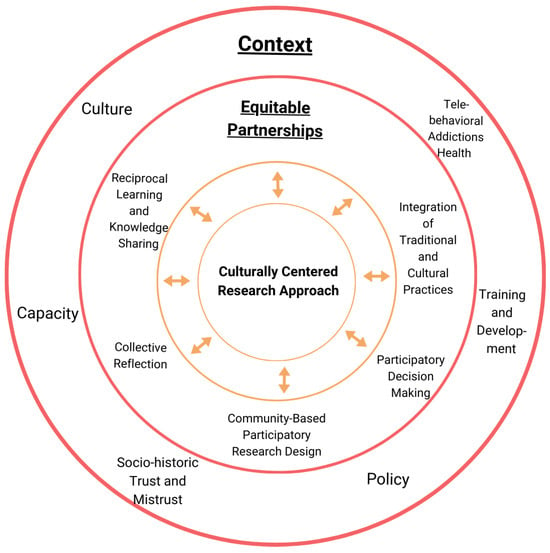
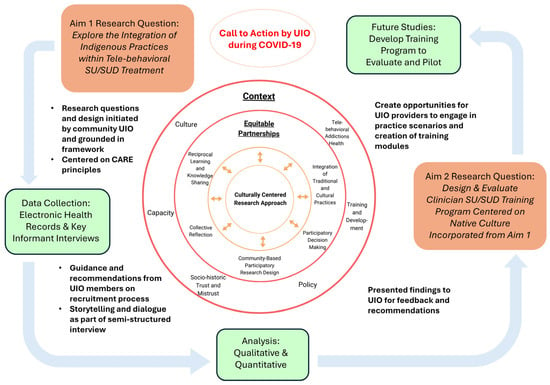
(1) Background: American Indian and Alaska Native (AI/AN) communities faced disproportionate COVID-19 infection rates and a higher prevalence of substance use disorders (SUDs). Telehealth emerged as a key strategy to address these health disparities. (2) Objective: In response to a call to action from an urban Indian organization (UIO), our multidisciplinary team conducted a community-based participatory study to (1) examine the integration of Native practices in SUD treatment during COVID-19, and (2) develop provider training modules based on these findings. (3) Methods: Using a mixed methods approach, we conducted semi-structured interviews with six community SUD providers, surveyed 91 clients, and analyzed 278 de-identified health records from the UIO Native-serving facility in the Southwest U.S. from May 2020 to May 2021. (4) Results: As of October 2024, analysis of Aim 1 is ongoing. With UIO engagement, findings from Aim 1 are being translated into training modules for Aim 2. (5) Conclusion: This community-driven study lays the foundation for future research on Indigenous mental well-being, centering strength, resilience, and cultural knowledge in substance use treatment. Findings will be disseminated through presentations and publications with Native and non-Native communities, treatment centers, educators, and leaders. Future studies will assess the effectiveness of the training modules among clinicians.
Full article
(This article belongs to the Special Issue The Health and Wellbeing of Indigenous Peoples)
►▼
Show Figures

Figure 1
Open AccessArticle
Impact of the 1742–1743 Plague Epidemic on Global Excess Deaths and Social Dynamics in the City of Santa Fe and Along the Royal Road Between Buenos Aires and Lima
by
Jorge Hugo Villafañe
Genealogy 2025, 9(1), 22; https://doi.org/10.3390/genealogy9010022 - 25 Feb 2025
Cited by 1
Abstract
►▼
Show Figures
The 1742–1743 plague epidemic significantly impacted Santa Fe, a key city along the Royal Road (Camino Real), a vital colonial trade route connecting Buenos Aires and Lima. This study examines the epidemic’s demographic and socio-economic consequences in Santa Fe, focusing on excess mortality
[...] Read more.
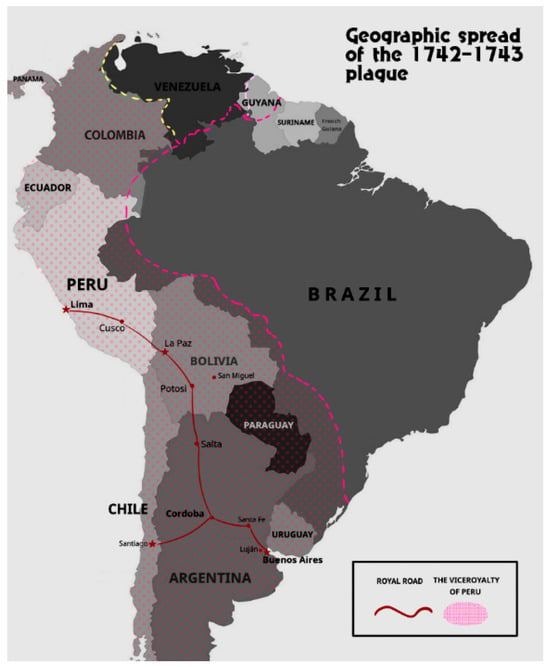
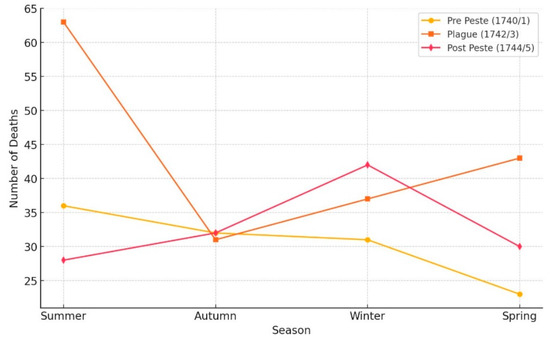
The 1742–1743 plague epidemic significantly impacted Santa Fe, a key city along the Royal Road (Camino Real), a vital colonial trade route connecting Buenos Aires and Lima. This study examines the epidemic’s demographic and socio-economic consequences in Santa Fe, focusing on excess mortality and its disproportionate impact on marginalized groups, such as Indigenous and African-descended populations. Utilizing parish records, census data, and archival sources, the research quantifies mortality rates during the epidemic and highlights the role of Santa Fe’s strategic position in facilitating the rapid spread of the disease. The findings underscore the intersection of systemic vulnerabilities and territorial dynamics shaped by Bourbon reforms, which exacerbated the epidemic’s effects. Furthermore, this study explores the resilience of local communities, emphasizing how cultural and religious practices contributed to recovery. By situating Santa Fe’s experience within the broader context of the Royal Road, this research provides a nuanced understanding of the complex interplay between epidemics, social structures, and demographic change in colonial Latin America, offering valuable insights for contemporary public health strategies.
Full article

Figure 1
Open AccessArticle
Taking a Cross-Faculty Stand Against Racism and Inequality: What Are Enabling and Inhibiting Factors Influencing the Placement Experiences of Black, Asian, Ethnic Minoritised Students in the Schools of Social Work, Education, and Health Sciences?
by
Carlene Cornish, Stephanie T. Jong, Isabella Albarran, Swati Kale, Sarah Brownsword, Cat Playfair, Sophie Vauzour, Tina Odu, Godfrey Lusigi and Virginia Shikuku
Genealogy 2025, 9(1), 21; https://doi.org/10.3390/genealogy9010021 - 25 Feb 2025
Abstract
Many Black, Asian, and ethnic minoritised students on university courses leading to professional qualifications face racism on placement. Our own institutional review at one UK university highlighted differential placement outcomes for students in the Schools of Social Work, Education, and Health Sciences. To
[...] Read more.
Many Black, Asian, and ethnic minoritised students on university courses leading to professional qualifications face racism on placement. Our own institutional review at one UK university highlighted differential placement outcomes for students in the Schools of Social Work, Education, and Health Sciences. To investigate, a qualitative study was conducted between April to October 2024, using focus groups and interviews with 20 students and 19 staff (lecturers and placement supervisors from the NHS, County Council, and schools). Researchers used NVivo to support the thematic analysis of the qualitative data. Key findings identified various enabling factors, including the significance of supervisory placement support and the quality of placement environment. However, our data further confirmed several inhibiting factors, including power dynamics, systemic failures, and broken trust, contributing to racialised and oppressive placement conditions. We recommend that the university and placement providers have a dedicated system for reporting race-specific incidents to a dedicated person/team who are trained and accountable for tackling and preventing racists incidents on placements.
Full article
(This article belongs to the Special Issue Tackling Race Inequality in Higher Education)
Highly Accessed Articles
Latest Books
E-Mail Alert
News
Topics
Conferences
Special Issues
Special Issue in
Genealogy
Self Determination in First Peoples Child Protection
Guest Editors: Teresa Libesman, Paul Gray, Wendy Hermeston, Kirsten GrayDeadline: 10 April 2025
Special Issue in
Genealogy
Tracing Roots, Shaping Futures: The History of Social Movements and Perspectives (Feminist, Indigenous, Masculinity, Political, Human Rights and Social Policy), Experiential Community Development, Resilience and Social and Gender Justice
Guest Editors: Bala Nikku, Rita DhungelDeadline: 30 April 2025
Special Issue in
Genealogy
(Re)Centering Midwest Refugee Resettlement and Home
Guest Editor: Jennifer EricksonDeadline: 30 April 2025
Special Issue in
Genealogy
Exploring Race and Memory: Perspectives from the U.S. and South Africa
Guest Editor: Alex LichtensteinDeadline: 1 May 2025