




-
The Politics of Culture in Journalism: News Media Consumption Across Political and Cultural Public Spheres -
What Journalism Feels Like: Considering the Body of the Journalist -
True Crime Podcasting as Participatory Journalism: A Digital Ethnography of Collaborative Case Solving -
Covering the Israeli–Palestinian Conflict: A Critical Discourse Analysis of Al Jazeera English and BBC’s Online Reporting on the 2023 Gaza War
Journal Description
Journalism and Media
is an international, peer-reviewed, open access journal on journalism and the media, published quarterly online by MDPI.
- Open Access— free for readers, with article processing charges (APC) paid by authors or their institutions.
- High Visibility: indexed within ESCI (Web of Science), Scopus and other databases.
- Rapid Publication: manuscripts are peer-reviewed and a first decision is provided to authors approximately 31.1 days after submission; acceptance to publication is undertaken in 5.5 days (median values for papers published in this journal in the second half of 2024).
- Journal Rank: JCR - Q2 (Communication) / CiteScore - Q1 (Linguistics and Language)
- Recognition of Reviewers: APC discount vouchers, optional signed peer review, and reviewer names are published annually in the journal.
Impact Factor:
2.0 (2023);
5-Year Impact Factor:
2.1 (2023)
Latest Articles
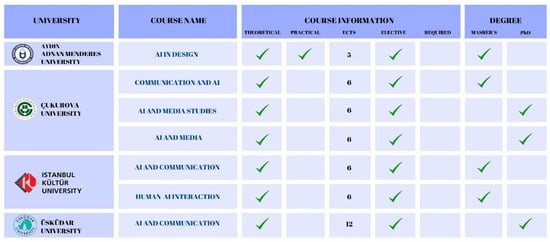
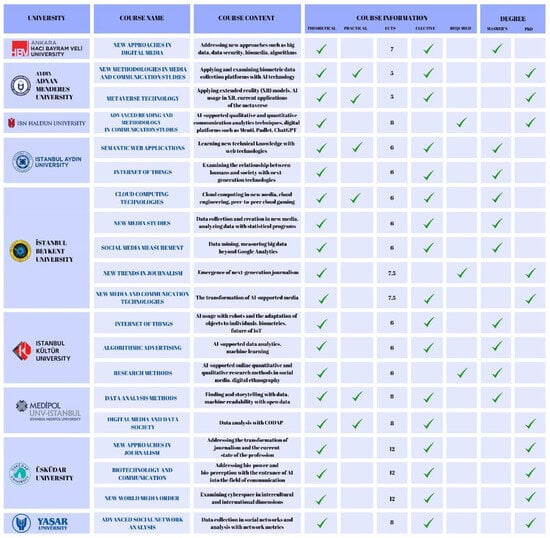
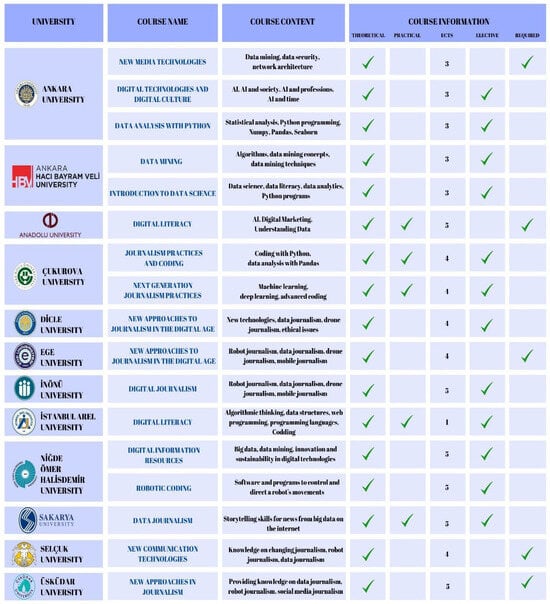
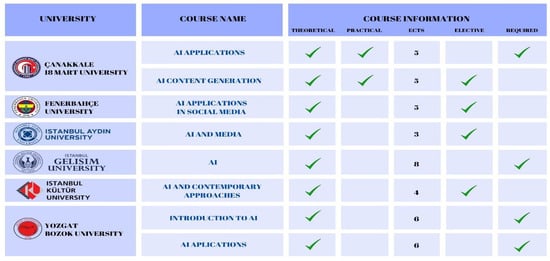
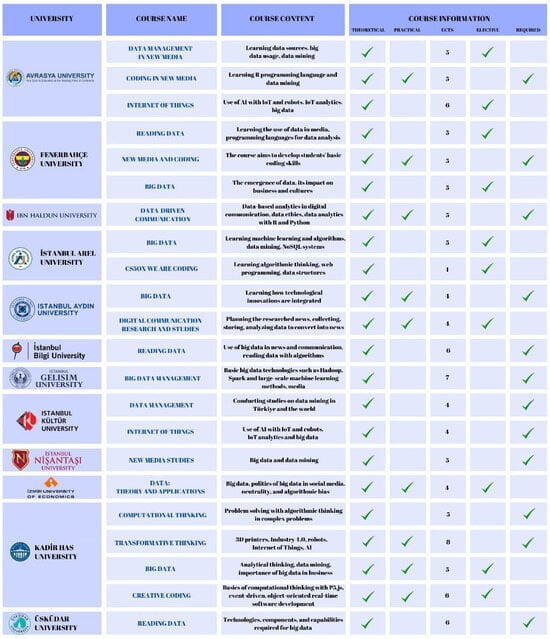
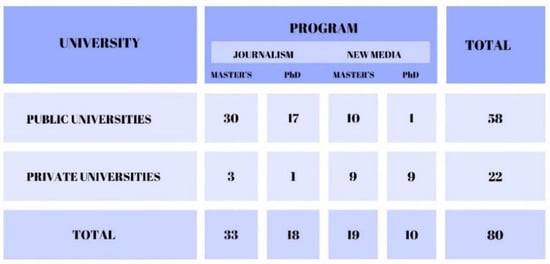
Artificial Intelligence and Journalism Education in Higher Education: Digital Transformation in Undergraduate and Graduate Curricula in Türkiye
Journal. Media 2025, 6(2), 52; https://doi.org/10.3390/journalmedia6020052 - 1 Apr 2025
Abstract
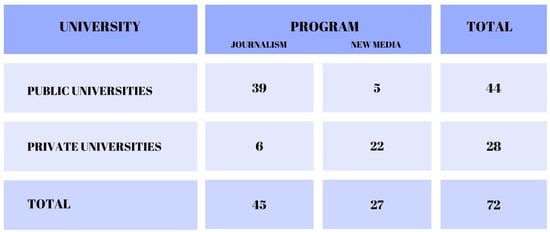
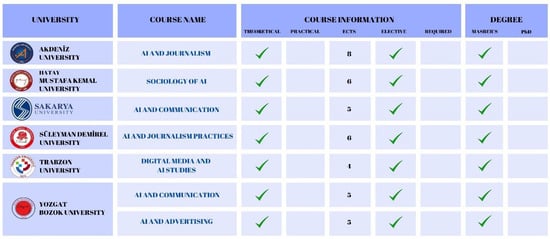
This study investigates the integration of artificial intelligence (AI) into undergraduate and graduate curricula in journalism and new media programs in Türkiye, offering a systematic analysis of course structures and content. Utilizing a qualitative research approach, this study combines document analysis and thematic
[...] Read more.
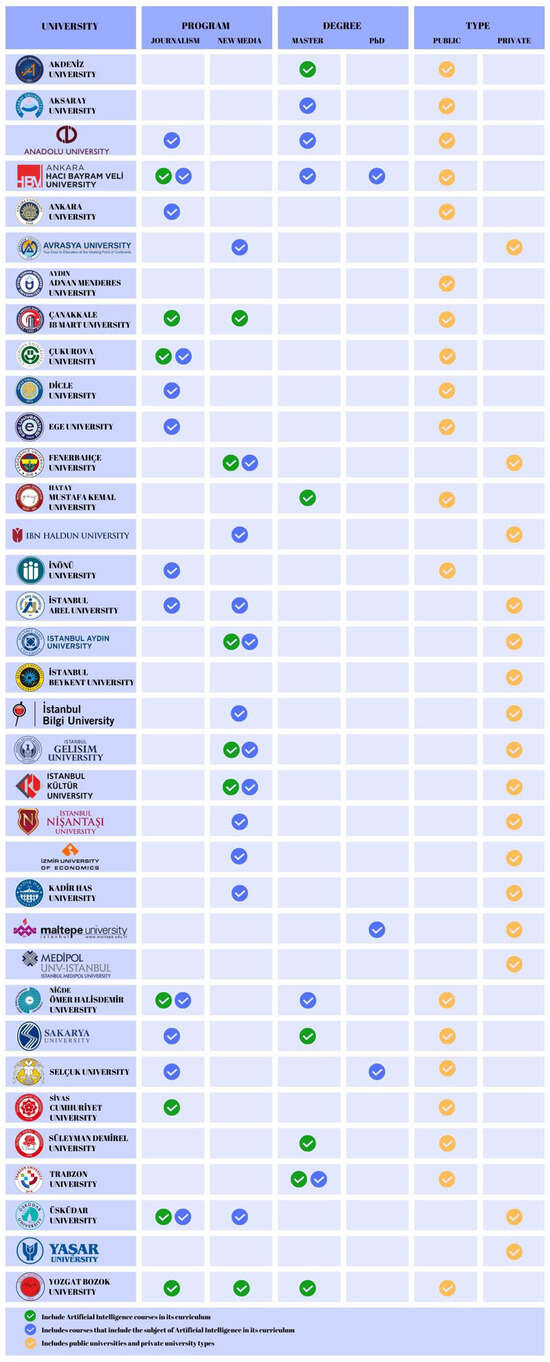
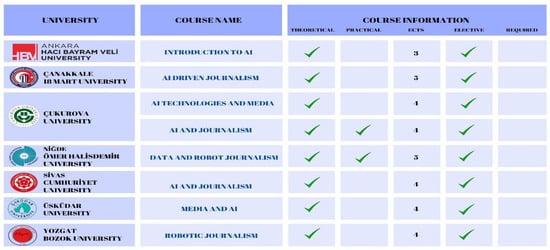
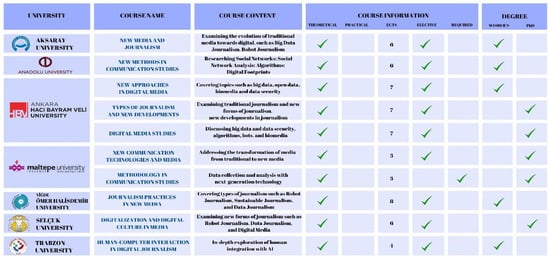
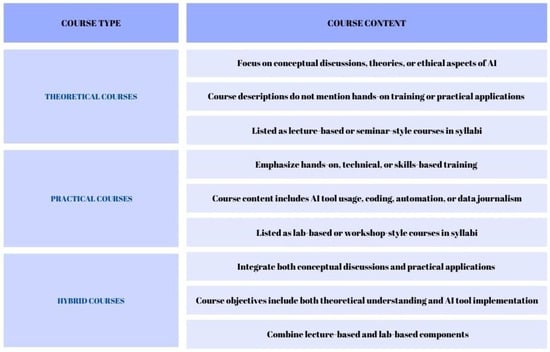
This study investigates the integration of artificial intelligence (AI) into undergraduate and graduate curricula in journalism and new media programs in Türkiye, offering a systematic analysis of course structures and content. Utilizing a qualitative research approach, this study combines document analysis and thematic content analysis to examine course catalogs, syllabi, and institutional reports from 72 universities. The findings reveal that AI education in these programs is predominantly theoretical, with courses emphasizing AI ethics, media algorithms, and the impact of automation on news production. Practical applications, such as data journalism and AI-assisted content creation are comparatively scarce. This study highlights the uneven distribution of AI-related courses across institutions, illustrating significant disparities in curriculum depth and focus. While some universities have embraced a more comprehensive AI framework, others offer minimal exposure to AI-related competencies. By systematically mapping AI course distribution across institutions, this study provides empirical insights into the gaps and disparities in AI education, offering recommendations for a curriculum compatible with digital transformation.
Full article
(This article belongs to the Special Issue The Challenges of Journalism in the Age of AI: Information Disorders, Social Gaps and New Opportunities)
►
Show Figures
Open AccessArticle
What If I Prefer Robot Journalists? Trust and Objectivity in the AI News Ecosystem
by
Elena Yeste-Piquer, Jaume Suau-Martínez, Marçal Sintes-Olivella and Enric Xicoy-Comas
Journal. Media 2025, 6(2), 51; https://doi.org/10.3390/journalmedia6020051 (registering DOI) - 1 Apr 2025
Abstract
The use of artificial intelligence (AI) in journalism has transformed the sector, with media generating content automatically without journalists’ involvement, and various media companies implementing AI solutions. Some research suggests AI-authored articles are perceived as equally credible as human-written content, while others raise
[...] Read more.
The use of artificial intelligence (AI) in journalism has transformed the sector, with media generating content automatically without journalists’ involvement, and various media companies implementing AI solutions. Some research suggests AI-authored articles are perceived as equally credible as human-written content, while others raise concerns about misinformation and trust erosion Most studies focus on journalists’ views, with audience attitudes explored mainly through quantitative methods, though there is no consensus regarding the acceptability of AI use by news organizations. We explore AI’s role in journalism through audience research, conducting five focus groups to understand public perceptions. The findings highlight concerns about AI-generated content, particularly potential errors, opacity, and coldness of the content. The information is perceived as somewhat less valuable, being viewed as more automated and requiring less human effort. These concerns coexist with a certain view of AI content as more objective, unbiased, and closer to the ideal of independence from political and economic pressures. Nevertheless, citizens with more AI knowledge question the neutrality of automated content, suspecting biases from corporate interests or journalists influencing the prompts.
Full article
(This article belongs to the Special Issue The Challenges of Journalism in the Age of AI: Information Disorders, Social Gaps and New Opportunities)
Open AccessArticle
Waithood, Music, Fakes, and Well-Being: Exploring the Mobile Lives of South African Township Youth Through the Mobile Diary Method
by
Priscilla Boshoff, Chikezie E. Uzuegbunam, Bimbo Fafowora, Nonhlanhla Ndlovu and Alette Schoon
Journal. Media 2025, 6(2), 50; https://doi.org/10.3390/journalmedia6020050 - 29 Mar 2025
Abstract
South Africans enjoy increasing access to digital connectivity. But little is known about the roles that mobile phones play in the everyday lives of young South Africans who live in marginalized spaces. Responding to this gap in the literature, we conducted research with
[...] Read more.
South Africans enjoy increasing access to digital connectivity. But little is known about the roles that mobile phones play in the everyday lives of young South Africans who live in marginalized spaces. Responding to this gap in the literature, we conducted research with a naturally occurring group of sixteen young adults, between the ages of 18 and 34, living in an under-resourced Eastern Cape township. Using the mobile diary method, we asked these young people how they use their mobiles as part of everyday sociality and to support their well-being. The article (1) reflects on the efficacy of the mobile diary method as a means of understanding our respondents’ lives and worlds; and (2) presents four themes emerging from the data generated by this method: “waithood”, “music”, “fakes”, and “wellbeing”. We conclude that the mobile diary method generates rewardingly rich data that reveal the complexity of township digitality and sociality. This texture avoids simplistic binaries and does justice to the experiences of young people in marginalized contexts.
Full article
(This article belongs to the Special Issue Sociality and Digitality: An Exploration of New Forms of Digital Social Connection and Belonging in Africa)
Open AccessArticle
“Virtual Masks” and Online Identity: The Use of Fake Profiles in Armenian Social Media Communication
by
Arthur V. Atanesyan, Samson Mkhitaryan and Anrieta Karapetyan
Journal. Media 2025, 6(2), 49; https://doi.org/10.3390/journalmedia6020049 - 26 Mar 2025
Abstract
►▼
Show Figures
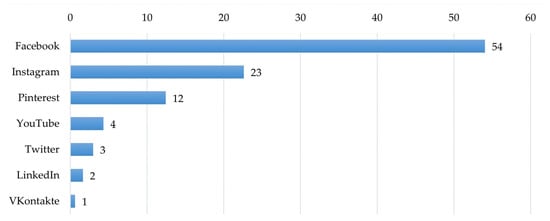
The goal of the study is to reveal the reasons (strategies) behind the use of “virtual masks” (fake profiles and altered identities) by real (human) users of social media networks (SMNs) within a cultural context, specifically in Armenia. Applying Erving Goffman’s Dramaturgical Theory
[...] Read more.
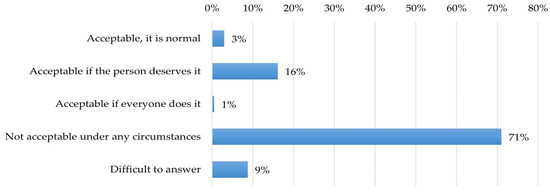
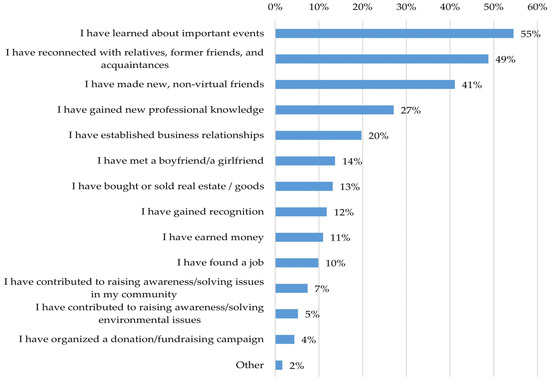
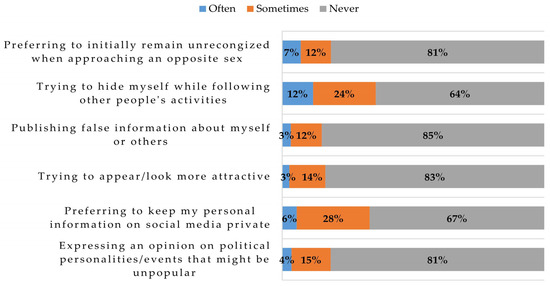
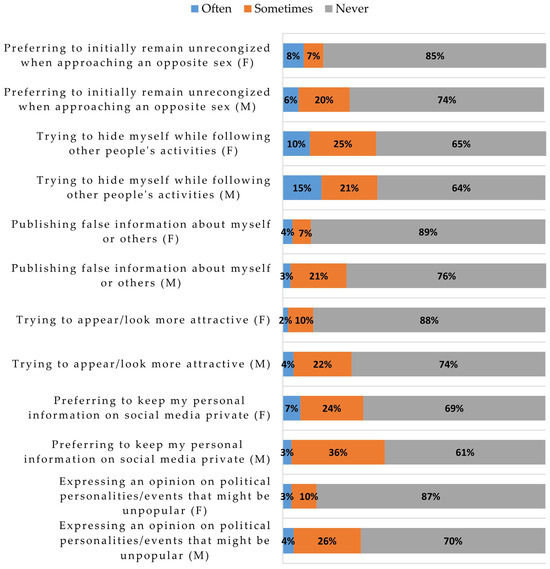
The goal of the study is to reveal the reasons (strategies) behind the use of “virtual masks” (fake profiles and altered identities) by real (human) users of social media networks (SMNs) within a cultural context, specifically in Armenia. Applying Erving Goffman’s Dramaturgical Theory and concepts of virtual identity, the research explores how users construct their online personas, either reflecting their real identities or modifying them to achieve specific communicative goals. A statistical analysis of the most popular SMNs in Armenia, combined with semi-structured interviews with 400 users, reveals diverse approaches to virtual communication. While SMNs facilitate news consumption, socializing, and professional networking, many users deliberately conceal personal information or engage in deceptive practices. Approximately 35% prefer anonymity when following others, and 24% of men and 11% of women admit to posting false information. Additionally, 26% of men and 12% of women alter their online appearance to enhance attractiveness. The study also highlights the role of anonymity in expressing controversial opinions, particularly in political discussions. Men are more inclined than women to create fake accounts and manipulate information to avoid social repercussions. Ultimately, the study highlights how “virtual masks” in Armenia reflect both cultural attitudes and broader global digital communication trends.
Full article

Figure 1
Open AccessArticle
Beyond Information Warfare: Exploring Fact-Checking Research About the Russia–Ukraine War
by
Ricardo Morais, Valeriano Piñeiro-Naval and David Blanco-Herrero
Journal. Media 2025, 6(2), 48; https://doi.org/10.3390/journalmedia6020048 - 25 Mar 2025
Abstract
The Russian invasion of Ukraine has also ignited a battleground in the domain of information. The conflict has been accompanied by a relentless disinformation offensive designed to manipulate public opinion and undermine democratic processes. This paper deals with the role of academia and
[...] Read more.
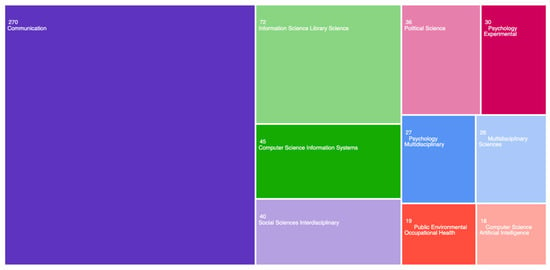
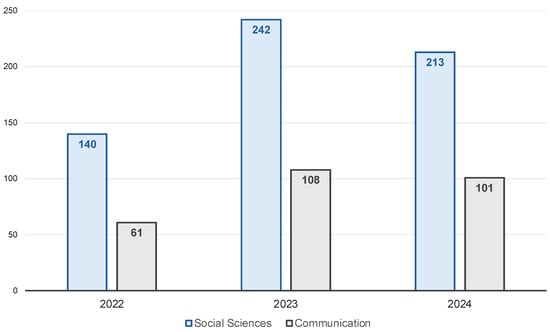
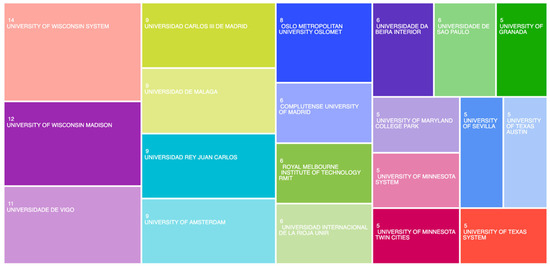
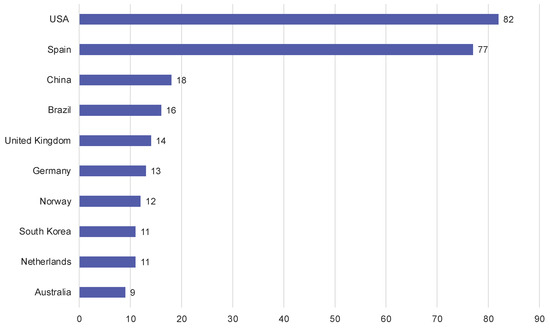
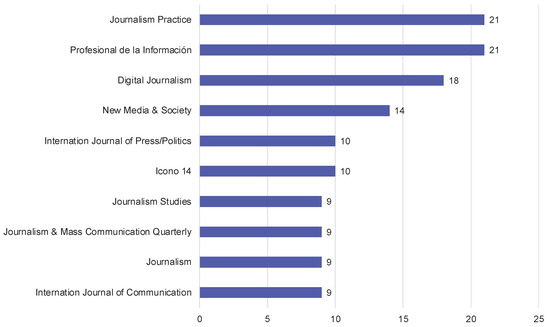
The Russian invasion of Ukraine has also ignited a battleground in the domain of information. The conflict has been accompanied by a relentless disinformation offensive designed to manipulate public opinion and undermine democratic processes. This paper deals with the role of academia and scholars in focusing this information warfare. This study conducts a comprehensive analysis of scientific articles to examine how researchers and institutions have addressed fact-checking initiatives. To this end, performance analysis and literature review are combined to observe the state of academic investigations on fact-checking during the first thousand days of war in Ukraine (from 24 February 2022 to 19 November 2024). To do this, we identified 595 fact-checking articles in the Web of Science database within the “Social Sciences” category and narrowed the focus to 270 articles in the field of “Communication”. Finally, through an in-depth literature review of eight manuscripts, we seek to understand the specific strategies employed by academics to address the conflict between Russia and Ukraine through fact-checking. Our findings suggest that fact-checking research on the Russia–Ukraine war predominantly examines the impact of disinformation in conflict contexts, the role of media literacy in countering false narratives, and the contribution of citizen journalism to verification efforts. These conclusions can shed light on the crucial role of academia in safeguarding truth and fostering informed public debate in an era of information overload and manipulation.
Full article
(This article belongs to the Special Issue Challenges for the European Union from the Perspective of Journalism, Political Communication and Digital Platforms)
►▼
Show Figures

Figure 1
Open AccessArticle
Social Media’s Influence on Gendered Interpersonal Communication: Insights from Jordan
by
Aseel Zibin, Yara Al-Sabatin and Abdel Rahman Mitib Altakhaineh
Journal. Media 2025, 6(2), 47; https://doi.org/10.3390/journalmedia6020047 - 22 Mar 2025
Abstract
This study aims to examine the impact of social media on interpersonal communication patterns in Jordan and determine whether there are gender differences. Through adopting a mixed-methods approach, quantitative data were collected using a structured questionnaire from a sample of 50 Facebook users
[...] Read more.
This study aims to examine the impact of social media on interpersonal communication patterns in Jordan and determine whether there are gender differences. Through adopting a mixed-methods approach, quantitative data were collected using a structured questionnaire from a sample of 50 Facebook users in Jordan chosen based on a self-selection method, comprising 24 men and 26 women, and two semi-structured focus group discussions were conducted with randomly selected 10 men and 10 women. The quantitative analysis showed that there were statistically significant differences between genders in terms of nonverbal communication and communication roles. However, no significant differences were found in verbal communication, listening, feedback, context, communication channels, and conflict resolution. The qualitative data provided further insight into the findings, demonstrating how cultural and societal norms, particularly those related to gender roles, influence interactions on social media. The participants expressed a range of perspectives on how social media impacts their communication, with many noting changes in communication dynamics due to increased exposure to global influences. In line with Genderlect Theory this study highlights the role of gender, demonstrating that while traditional gender-based communication styles endure, they are progressively shaped by the dynamic and evolving nature of digital interactions.
Full article
(This article belongs to the Special Issue Gender, Television and Digital Media: Representations and Practices in a Platformized Public Landscape)
Open AccessFeature PaperArticle
Engagement + Expertise = Trust? Comparing Pathways to Credibility for Journalism and Healthcare
by
Young Eun Moon, Sung-Hee Wendy Paik, Kristy Roschke, Jacob L. Nelson and Seth C. Lewis
Journal. Media 2025, 6(2), 46; https://doi.org/10.3390/journalmedia6020046 - 21 Mar 2025
Abstract
►▼
Show Figures
Many journalists believe they must become more engaged with the public to improve trust in news. What remains unknown is how the public weighs the trustworthiness of engagement relative to the trustworthiness of a more traditional journalistic value: expertise. This study aims to
[...] Read more.
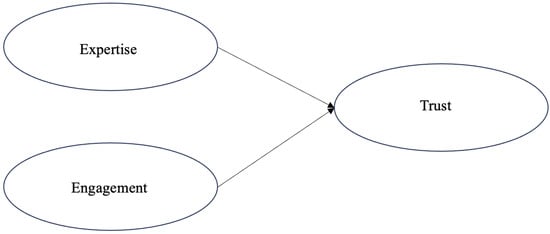
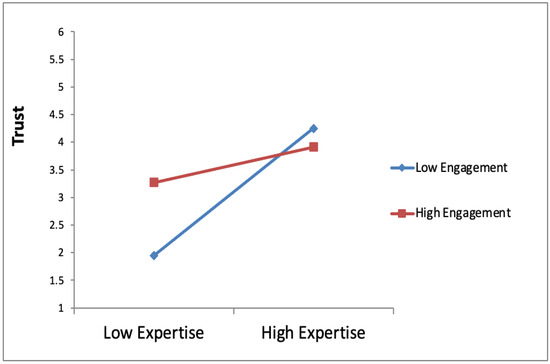
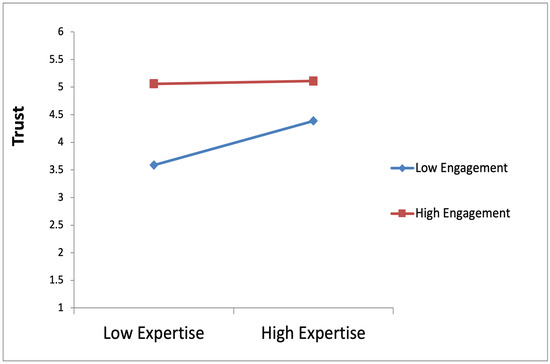
Many journalists believe they must become more engaged with the public to improve trust in news. What remains unknown is how the public weighs the trustworthiness of engagement relative to the trustworthiness of a more traditional journalistic value: expertise. This study aims to address this gap by assessing public perceptions of engagement and expertise within journalism and comparing them with perceptions of expertise and engagement within another institution dealing with similarly high levels of distrust: healthcare. Professionals within both journalism and healthcare are attempting to mitigate their trust crises by increasing their engagement with the people they seek to serve, which means each profession is currently navigating an uncertain balancing act between engagement and people’s perceived expertise that this study seeks to explore. Using a US-based survey (N = 981) and employing structural equation modeling (SEM), we find that, when it comes to journalism, engagement does not significantly influence trust, while perceived expertise has a positive impact. In contrast, perceptions of healthcare specialists show both perceived expertise and engagement positively influencing trust, with engagement having a stronger effect. We conclude by exploring the implications of these findings for the relationship between journalists and the public.
Full article

Figure 1
Open AccessArticle
The Speech Behaviour of Kazakhstani Youth in the Context of Interethnic Communication
by
Sholpan Zharkynbekova, Zukhra Shakhputova, Olga Anichshenko and Zhazira Agabekova
Journal. Media 2025, 6(1), 45; https://doi.org/10.3390/journalmedia6010045 - 18 Mar 2025
Abstract
This article explores the features of speech practices of young people in Kazakhstan in the conditions of interaction between Kazakh, Russian, and English, taking into account the influence of the digital environment and modern socio-cultural factors. The relevance of this study is determined
[...] Read more.
This article explores the features of speech practices of young people in Kazakhstan in the conditions of interaction between Kazakh, Russian, and English, taking into account the influence of the digital environment and modern socio-cultural factors. The relevance of this study is determined by the rapid transformation of the language situation in Kazakhstan, where traditional bilingualism is evolving under the influence of globalisation and digital factors, contributing to the formation of new models of language interaction in the youth environment. The aim of this research is to study the mechanisms of language functioning in different communicative contexts, including digital communication. As a methodological basis, the methods of sociolinguistic and discourse analysis were applied, including the collection and interpretation of young people’s written texts, as well as interviewing respondents to identify their language preferences and communication strategies. The empirical analysis allowed us to identify new models of young people’s linguistic behaviour in various communicative environments, including online space. The leading factors influencing the choice of language code were identified, and the characteristic mechanisms of integrating elements of Kazakh, Russian, and English into a single speech act were recorded. Special attention is paid to the specifics of language interaction in digital environments, where hybrid forms of communication are observed due to technological and globalisation processes. This study considers the speech of young people not only as a linguistic phenomenon, but also as an instrument of intercultural communication, reflecting trends in the development of polylingualism. The findings of this study can be used to improve language policy and to develop educational programmes that take into account modern trends in youth communication.
Full article
(This article belongs to the Special Issue Role of Intercultural Communication in Multicultural or Culturally Diverse Societies)
Open AccessArticle
Professional Multilingualism in Intercultural Business Communication of Kazakhstan
by
Aliya Aimoldina and Damira Akynova
Journal. Media 2025, 6(1), 44; https://doi.org/10.3390/journalmedia6010044 - 14 Mar 2025
Abstract
This study examines the role of multilingualism in intercultural business communication among professionals in Kazakhstan, where business discourse reflects a unique combination of language planning, individual competencies, and integration of traditions with modern economic demands. Shaped by globalization, historical influences, and geopolitical factors,
[...] Read more.
This study examines the role of multilingualism in intercultural business communication among professionals in Kazakhstan, where business discourse reflects a unique combination of language planning, individual competencies, and integration of traditions with modern economic demands. Shaped by globalization, historical influences, and geopolitical factors, Kazakhstan’s business communication is characterized by the use of Kazakh, Russian, and English, along with other foreign languages. Using semi-structured interviews with 19 business professionals from 13 companies, the study examines multilingual practices, language learning processes, and the impact of cultural factors on workplace interactions. Findings reveal that Kazakh, Russian, and English serve distinct functions in professional settings: Kazakh, as the state language, is gaining prominence in the business sphere, particularly in official documentation and government-mandated communication; Russian remains dominant in private and regional business interactions; and English is indispensable for international business. While proficiency in multiple languages facilitates overcoming intercultural barriers, differences in negotiation styles, non-verbal communication, and decision-making processes highlight the need for cultural flexibility in business settings. The study underscores the necessity of implementing well-structured and context-sensitive language policies while advocating for the integration of professional multilingual training into educational curricula to bridge the gap between academic preparation and workplace demands. This research contributes to a broader understanding of how multilingualism shapes professional identity, workforce mobility, and intercultural competence in Kazakhstan’s increasingly globalized business landscape.
Full article
(This article belongs to the Special Issue Role of Intercultural Communication in Multicultural or Culturally Diverse Societies)
Open AccessArticle
Exploring Conflict Escalation: Power Imbalance, Alliances, Diplomacy, Media, and Big Data in a Multipolar World
by
Arshed Simo, Shamal Mustafa and Kawar Mohammed Mousa
Journal. Media 2025, 6(1), 43; https://doi.org/10.3390/journalmedia6010043 - 13 Mar 2025
Abstract
The analysis in this study covers how power imbalance, alliance cohesion, diplomatic and media framing, and big data analytics affect scaling up in the conflict in a multipolar world. This research applies the Constructivist International Relations Theory to examine survey data of 250
[...] Read more.
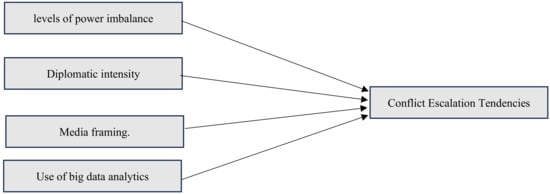
The analysis in this study covers how power imbalance, alliance cohesion, diplomatic and media framing, and big data analytics affect scaling up in the conflict in a multipolar world. This research applies the Constructivist International Relations Theory to examine survey data of 250 international relations experts, policymakers, and analysts using Survey Structured Equation Modeling (SEM) via SMART-PLS. Power imbalance and the way the media frames the situation are found to lead to an escalation of conflicts, but strong alliance cohesion, diplomatic effort, and big data analytics can mitigate the risk of the escalation. Strategic diplomacy, media regulation, and real-time data monitoring have thus shown their capacity to prevent conflict. These contribute to conflict studies by incorporating political IR models, data science knowledge, and policy advice on global security governance. This means they can support the prediction and prevention of conflicts by means of diplomatic transparency, ethical media practice, and AI early warning systems. This study is limited by the use of self-reported data; however, the results of this study indicate that this topic is under-explored in cultural and geopolitical terms. The results help inform policymakers and security entities on ways to address conflict resolution as a matter of discretion and from a multidimensional perspective. Survey Structured Equation Modeling (SEM) via SMART-PLS is a technique used for analyzing structural relationships between measured variables and latent constructs, providing valuable insights into complex models. Survey Structured Equation Modeling (SEM) via SMART-PLS is a technique used for analyzing structural relationships between measured variables and latent constructs, providing valuable insights into complex models.
Full article
(This article belongs to the Special Issue Challenges for the European Union from the Perspective of Journalism, Political Communication and Digital Platforms)
►▼
Show Figures

Figure 1
Open AccessArticle
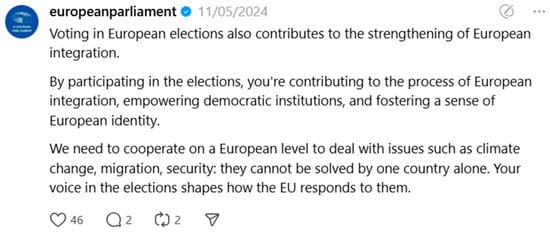
Digital Political Communication in the European Parliament: A Comparative Analysis of Threads and X During the 2024 Elections
by
Ana Velasco Molpeceres, Jorge Miranda-Galbe and María Prieto Muñiz
Journal. Media 2025, 6(1), 42; https://doi.org/10.3390/journalmedia6010042 - 13 Mar 2025
Abstract
In an era marked by digital transformation and political polarization, the European Union faces significant challenges in maintaining effective communication and public trust. This study examines the European Parliament’s use of Threads and X (formerly Twitter) during the 2024 European Parliament elections, analyzing
[...] Read more.
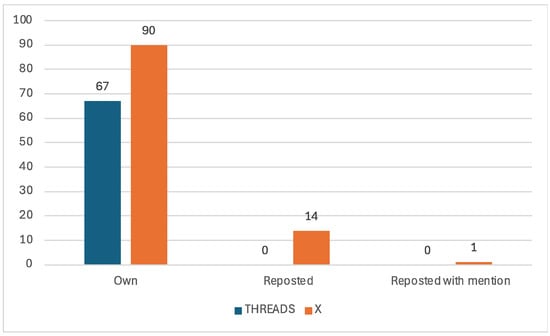
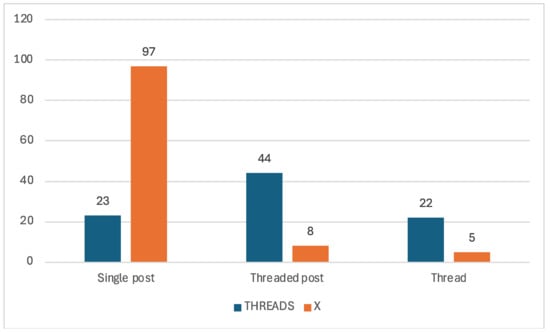
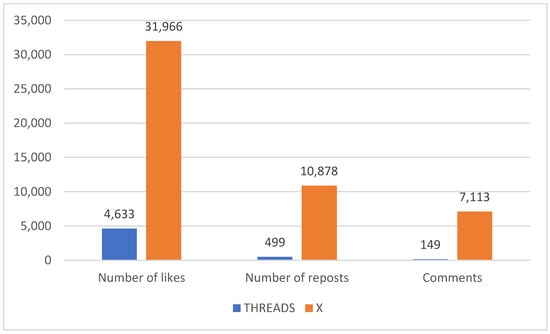
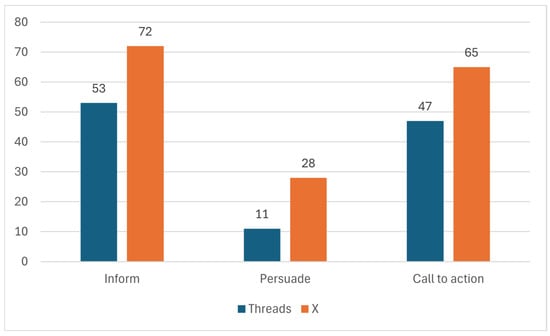
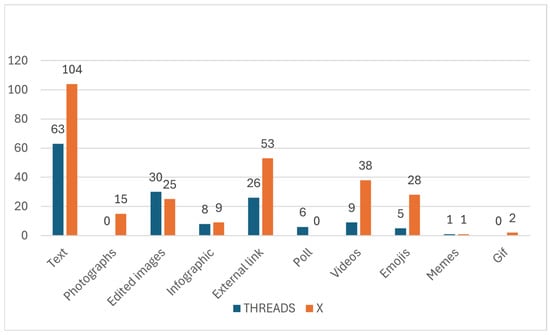
In an era marked by digital transformation and political polarization, the European Union faces significant challenges in maintaining effective communication and public trust. This study examines the European Parliament’s use of Threads and X (formerly Twitter) during the 2024 European Parliament elections, analyzing the types of content published, multimedia resources employed, and engagement generated on both platforms. Using a quantitative content analysis of 171 posts from the official English-language accounts, this research identifies key differences in communication strategies across platforms. Findings reveal that X prioritizes video content, mentions, and reposts, fostering higher user engagement, whereas Threads leans toward infographics and a more informative approach. The study highlights the fragmented nature of digital political communication and underscores the necessity for the European Parliament to adapt its strategies to the dynamics of each platform. These insights contribute to a broader understanding of institutional communication in an evolving digital ecosystem and its implications for electoral mobilization and public discourse.
Full article
(This article belongs to the Special Issue Challenges for the European Union from the Perspective of Journalism, Political Communication and Digital Platforms)
►▼
Show Figures

Figure 1
Open AccessCommunication
The Role of Requests for Information in Governing Digital Platforms Under the Digital Services Act: The Case of X
by
Matteo Fabbri
Journal. Media 2025, 6(1), 41; https://doi.org/10.3390/journalmedia6010041 - 12 Mar 2025
Abstract
The Digital Services Act (DSA) is the first supranational regulation aimed at improving the safety, transparency and accountability of online platforms. However, the DSA enforcement process is substantially opaque due to the scarcity of publicly available legal documents on methods, sources and results
[...] Read more.
The Digital Services Act (DSA) is the first supranational regulation aimed at improving the safety, transparency and accountability of online platforms. However, the DSA enforcement process is substantially opaque due to the scarcity of publicly available legal documents on methods, sources and results of the investigations carried out under its scope. This paper examines the transparency of the DSA enforcement process, focusing on the legal and political motivations of the progression from requests for information (RFIs) to the initiation of proceedings, using the European Commission’s investigation against X as a case study.
Full article
(This article belongs to the Special Issue Challenges for the European Union from the Perspective of Journalism, Political Communication and Digital Platforms)
Open AccessArticle
Constructing Authenticity as an Alternative to Objectivity: A Study of Non-Fiction Journalism in Chinese Media
by
Haiyan Wang and Yuyao Ni
Journal. Media 2025, 6(1), 40; https://doi.org/10.3390/journalmedia6010040 - 11 Mar 2025
Abstract
In recent years, non-fiction journalism, regarded as a subset of literary and narrative journalism, has garnered significant attention in Chinese media. This trend underscores a notable departure from traditional journalistic norms of objectivity toward an emphasis on authenticity. Drawing upon a comprehensive analysis
[...] Read more.
In recent years, non-fiction journalism, regarded as a subset of literary and narrative journalism, has garnered significant attention in Chinese media. This trend underscores a notable departure from traditional journalistic norms of objectivity toward an emphasis on authenticity. Drawing upon a comprehensive analysis of 348 articles sourced from Southern People Weekly, a prominent media outlet for non-fiction journalism in China, this study examines the construction of authenticity along two distinct dimensions: voice and visibility. The voice dimension encompasses the utilization of first-person narratives by sources, the expression of authorial voice, and the orchestration of polyphony between journalists and their sources. The visibility dimension pertains to the portrayal of sources through visual imagery, the strategic presentation of journalists, and the scenic depiction of context and environment. Based on these findings, this study discusses the challenges posed by this narrative paradigm to the traditional notion of objectivity and its implications for the rising ideal of subjective journalism.
Full article
Open AccessArticle
Media Framing of Jordanian Legislative Performance in Television Talk Shows
by
Ramez Abuhasirah
Journal. Media 2025, 6(1), 39; https://doi.org/10.3390/journalmedia6010039 - 9 Mar 2025
Abstract
Talk shows have a vital role in framing legislative issues to influence public attitudes, in a way that serves and achieves the interests of those in charge of these talk shows. The coverage of the talk show Voice of the Kingdom during the
[...] Read more.
Talk shows have a vital role in framing legislative issues to influence public attitudes, in a way that serves and achieves the interests of those in charge of these talk shows. The coverage of the talk show Voice of the Kingdom during the second regular session of the National Assembly reveals the spotlight on the performance of the legislative authority, which is the basis for approving, rejecting, or amending laws in Jordan. It also highlights the way talk shows address the performance of the legislative authority in exercising its legislative and oversight role and analyzes the elements on which these talk shows rely in framing legislative issues, as these treatments reflect the public’s interpretations and priorities towards the performance of the legislative authority. To achieve these objectives, the media content analysis approach was used to analyze the media frames of 37 episodes of the Voice of the Kingdom talk show during the second regular session of the 19th National Assembly, which extended from 13 November 2022 to 7 May 2023. This article reveals that the Voice of the Kingdom talk show framed the performance of the legislative authority within the framework of economic results, responsibility, and human interests. The methods of treatment were characterized by the analytical approach, while it relied on rational persuasion methods in treating the performance of the legislative authority. The results concluded that the process of framing the Voice of the Kingdom talk show for the performance of the legislative authority acquires its characteristics from the nature of the television channel’s orientations, the vision of the talk show makers, and the goals they seek to achieve, which gives the communicator an influential role in framing legislative performance.
Full article
Open AccessArticle
Platform-Specific Masculinities: The Evolution of Gender Representation in Indonesian Reality Shows Across Television and Digital Media
by
Alem Febri Sonni, Vinanda Cinta Cendekia Putri, Muhammad Akbar and Irwanto Irwanto
Journal. Media 2025, 6(1), 38; https://doi.org/10.3390/journalmedia6010038 - 7 Mar 2025
Abstract
This study examines the transformation of masculine representation across television and digital platforms in Indonesian reality shows. We identified distinct patterns of masculine representation emerging across platforms through a mixed-method analysis of 240 h of television programming, 1100 digital media items, and survey
[...] Read more.
This study examines the transformation of masculine representation across television and digital platforms in Indonesian reality shows. We identified distinct patterns of masculine representation emerging across platforms through a mixed-method analysis of 240 h of television programming, 1100 digital media items, and survey data from 1000 respondents. Our study reveals a significant decline in traditional masculine representations from 85% to 30% between 2019 and 2024, accompanied by the rise of “platform-specific masculinities”. The research identifies three primary categories: traditional (dominated by competitive achievement), emotional (characterized by interpersonal connection), and creativity (marked by innovative self-expression). Digital platforms demonstrate higher engagement rates for emotional (380 k interactions) and creative content (320 k interactions) compared to traditional representations (180 k interactions), particularly among younger audiences (18–24). While television maintains predominantly traditional representations (65%), digital platforms, especially TikTok, show higher proportions of emotional (42%) and creative (45%) expressions. These findings contribute to understanding how platform characteristics influence gender representation and suggest implications for media production in Southeast Asia.
Full article
(This article belongs to the Special Issue Gender, Television and Digital Media: Representations and Practices in a Platformized Public Landscape)
►▼
Show Figures

Figure 1
Open AccessArticle
Issues and Challenges Facing the Greek Regional Press: Fight for Survival
by
Emmanouil Genikopoulos and Efstathios Dimitriadis
Journal. Media 2025, 6(1), 37; https://doi.org/10.3390/journalmedia6010037 - 5 Mar 2025
Abstract
Over the past decade in Greece, over 130 regional newspapers are no longer being printed and therefore have ceased their publication. As a consequence, publishers/owners, journalists, and editors have expressed their concerns about the future of local newspapers and have become increasingly pessimistic
[...] Read more.
Over the past decade in Greece, over 130 regional newspapers are no longer being printed and therefore have ceased their publication. As a consequence, publishers/owners, journalists, and editors have expressed their concerns about the future of local newspapers and have become increasingly pessimistic regarding the business future of the Greek regional press. This study strongly focuses on the various challenges and complex difficulties they have to face and overcome in order to retain their validity and credibility, seeing that the viability of their business is declining significantly. Along with its scientifically substantiated research, which are conducted through a questionnaire, a sample of 176 employees (publishers/owners, journalists, and editors) is examined out of the total of 199 local newspapers that are being legally printed today in the country (111 daily and 88 weekly releases). The main point of emphasis is to showcase and highlight the personal experiences and opinions of the people that are working in the industry, justifying and analyzing the dangers and risks that are threatening the future of local print media. The presentation and the evaluation of its results show negative and frustrating insights that can potentially lead to an uncertain future in the coming years. By combining both the negative responses of the participants and their low level of satisfaction regarding the government’s efforts and support measures, a clear conclusion is drawn that the Greek regional press is fighting for its survival. It seems probable that, in the upcoming future, even more regional newspapers will suspend their circulation.
Full article
Open AccessArticle
Correlation Between Post-Pandemic Climate Change Advocacy on TikTok and Knowledge, Attitude, and Adaptation Practices Among TikTok Users in Nigeria
by
Charity A. Ben-Enukora, Mary P. Soroaye, Agwu A. Ejem, Chika E. Asogwa, Success E. U. Ojih and Daniel T. Ezegwu
Journal. Media 2025, 6(1), 36; https://doi.org/10.3390/journalmedia6010036 - 27 Feb 2025
Abstract
This study examined the relationship between climate change advocacy on TikTok and knowledge, attitude, and adaptation practices among TikTok users in Nigeria. This study employed quantitative methods, using content analysis and cross-sectional survey approaches to generate data. An API tool was used to
[...] Read more.
This study examined the relationship between climate change advocacy on TikTok and knowledge, attitude, and adaptation practices among TikTok users in Nigeria. This study employed quantitative methods, using content analysis and cross-sectional survey approaches to generate data. An API tool was used to scrape 342 TikTok videos, out of which 16 videos with comprehensive information about climate change were purposively selected, and 381 survey participants were purposively selected from 23.84 million TikTok users in Nigeria. The data were presented in simple frequency tables, while the Pearson’s Correlation analysis was conducted on the survey data acquired to draw inferences. The results of the content analysis suggest that users in Nigeria have contributed a little in providing comprehensive climate advocacy content on TikTok; most of available videos emanated from official sources and projected the anthropogenic nature of the climate crisis but denoted a pessimistic and alarming tone, which may induce despair and outright disregard for the messages. The survey results depict limited exposure to climate change content on TikTok, even though the knowledge of climate change was adequate. More so, polarised perceptions and attitudes, and maladaptive practices in tree planting as well as plastic and household wastes management were observed. The correlation coefficients show a negative and statistically non-significant correlation between exposure to climate advocacy on TikTok and knowledge, attitude, and adaptation practices, but there is a positive but insignificant relationship between the perception of climate change advocacy on TikTok and adaptation practices. These findings suggest the need for more intentional policies that will drive positive attitudinal changes and adaptation practices among young people in Nigeria.
Full article
Open AccessArticle
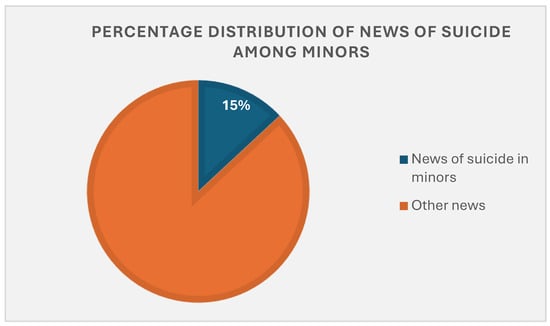
Suicide of Minors in the Spanish Press: Analysis from the Perspective of Public Interest and the Limits of Freedom of Information
by
Diego García-Fernández, Ana M. Marcos del Cano and Gabriela Topa
Journal. Media 2025, 6(1), 35; https://doi.org/10.3390/journalmedia6010035 - 27 Feb 2025
Abstract
►▼
Show Figures
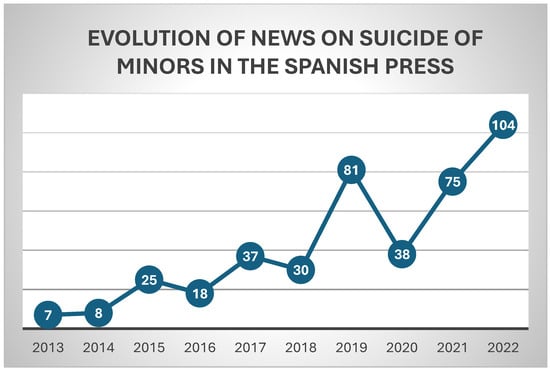
Every year, more than 700,000 people die by suicide worldwide, a quarter of whom are between 15 and 29 years of age. In Spain, suicide has surpassed road traffic accidents as the leading non-natural cause of death in this age group. Although its
[...] Read more.
Every year, more than 700,000 people die by suicide worldwide, a quarter of whom are between 15 and 29 years of age. In Spain, suicide has surpassed road traffic accidents as the leading non-natural cause of death in this age group. Although its overall incidence remains low, the number of suicide attempts continues to rise, indicating an upward trend. Despite being recognized as a significant public health issue, the media often refrains from reporting on suicide to prevent the Werther effect, thereby avoiding the potential propagation of suicidal behavior. This is a form of self-censorship in the exercise of freedom of information, a right recognized by the Spanish Constitution, which also undermines the right of citizens to receive such content. The Spanish Constitutional Court has determined that public interest is a mandatory requirement to endorse the legitimacy of a news item in case of a clash with any of the rights that legally limit freedom of information. This article aims to analyze whether, in those exceptional cases in which the rule of silence is broken, the information on suicide in young people is in line with the jurisprudential concept of public interest, above privacy, honor or self-image and, especially, above the protection of children and adolescents. As a research method, this study analyzes a selection of news articles on suicides of minors, published in Spanish digital newspapers and compiled into a self-developed database. These articles are examined through the lens of the Spanish Constitutional Court’s doctrine on freedom of information. The findings indicate that public interest is unequivocally justified when news coverage focuses on aggregated data regarding suicide or suicide attempts among minors. However, when reporting on the suicide of an individual minor, the justification from the perspective of freedom of information depends on the specifics of each case, requiring a careful balance between public interest and the protection of fundamental rights.
Full article

Figure 1
Open AccessArticle
Persuasion Strategies Used by Medical Experts vs. Political Figures: A Study of Coronavirus-Related Media Discourse
by
Mohammad Mohtasham, Fatemeh Mahdavirad, Ali Akbar Jabbari and Golnar Mazdayasna
Journal. Media 2025, 6(1), 34; https://doi.org/10.3390/journalmedia6010034 - 27 Feb 2025
Abstract
Concentrating on different types of persuasion strategies used by medical experts and political figures, the present study aims to examine persuasion strategies in medical vs. political discourse. Four corpora of speeches and interviews of four different groups of politicians and health professionals related
[...] Read more.
Concentrating on different types of persuasion strategies used by medical experts and political figures, the present study aims to examine persuasion strategies in medical vs. political discourse. Four corpora of speeches and interviews of four different groups of politicians and health professionals related to COVID-19 were selected. Two corpora belonged to Iranian figures, and two corpora represented Western figures. Then, using a framework which encompasses textual and interpersonal markers, the persuasive properties of the four corpora were investigated. The results indicated that logical markers emerge as the most frequent elements in textual subcategories of the persuasive metadiscourse observed in all four corpora. Moreover, in the case of the interpersonal subcategories, it was found that although hedges have a key role in the persuasive qualities of the texts, certainty markers appear to be largely absent within this corpus, which could suggest that the speakers are reluctant to take a stance while discussing a divisive and new issue such as COVID-19. The results provide insights into how the public’s understanding of the situation can be shaped and shifted in times of crisis, using persuasive devices by public figures.
Full article
(This article belongs to the Collection Role of Media and Journalism during COVID-19 Pandemic: Lessons Learned and Future Challenges)
Open AccessArticle
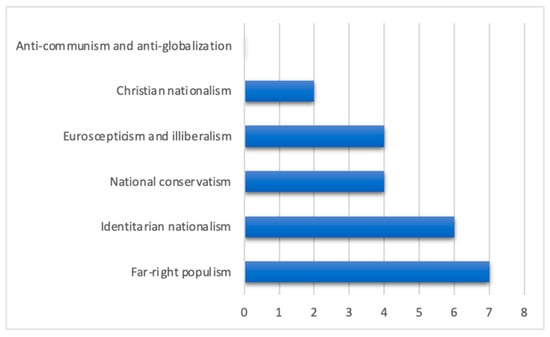
Attracting the Vote on TikTok: Far-Right Parties’ Emotional Communication Strategies in the 2024 European Elections
by
Manuel J. Cartes-Barroso, Noelia García-Estévez and Sandra Méndez-Muros
Journal. Media 2025, 6(1), 33; https://doi.org/10.3390/journalmedia6010033 - 25 Feb 2025
Abstract
This study analyses the emotional communication strategies employed by far-right party leaders on TikTok during the 2024 European elections, focusing on their appeal to voters. Combining quantitative and qualitative content analysis of 472 videos from 27 leaders in 24 countries, the research examines
[...] Read more.
This study analyses the emotional communication strategies employed by far-right party leaders on TikTok during the 2024 European elections, focusing on their appeal to voters. Combining quantitative and qualitative content analysis of 472 videos from 27 leaders in 24 countries, the research examines the dominant emotions, themes, stylistic resources, and their impact on engagement. The results reveal a dual strategy that combines positive emotions such as hope and ambition, which generate the highest levels of engagement, with negative emotions such as fear and uncertainty, which emphasise crisis narratives. Leaders who balance optimism with polarising narratives show greater resonance, particularly with audiences. The findings underscore the growing role of TikTok in far-right political communication and demonstrate its effectiveness in mobilising emotional engagement among young people. Despite limitations, the study highlights the sophistication of emotional strategies in digital political communication and provides insights into how far-right leaders use TikTok to influence voter behaviour.
Full article
(This article belongs to the Special Issue Challenges for the European Union from the Perspective of Journalism, Political Communication and Digital Platforms)
►▼
Show Figures

Figure 1
Highly Accessed Articles
Latest Books
E-Mail Alert
News
Topics
Conferences
Special Issues
Special Issue in
Journalism and Media
Sociality and Digitality: An Exploration of New Forms of Digital Social Connection and Belonging in Africa
Guest Editors: Anthea Garman, Nonhlanhla NdlovuDeadline: 31 May 2025
Special Issue in
Journalism and Media
Unravelling the Media’s Role in Technological Innovation and AI's Environmental, Social, and Economic Impacts
Guest Editors: Mathias Felipe De-Lima-Santos, Adeola Abdulateef ElegaDeadline: 30 June 2025
Special Issue in
Journalism and Media
Emerging Technologies in Communication: Best Practices and Theoretical Frameworks for Professional Success
Guest Editors: Daniel-Rareș Obadă, Mihaela-Alexandra Tudor, Murat MenguDeadline: 30 June 2025
Special Issue in
Journalism and Media
Communication in Startups: Competitive Strategies for Differentiation
Guest Editors: Carlos de las Heras-Pedrosa, Dolores Rando-Cueto, Ainhoa del Pino Rodríguez-VeraDeadline: 31 October 2025
Topical Collections
Topical Collection in
Journalism and Media
Role of Media and Journalism during COVID-19 Pandemic: Lessons Learned and Future Challenges
Collection Editor: María Luisa Humanes