





-
A Home for All: The Challenge of Housing in Refugee Resettlement -
AI Accountability in Judicial Proceedings: An Actor–Network Approach -
Light Pollution Control: Comparative Analysis of Regulations Across Civil and Common Law Jurisdictions -
Practice and Prospect of Regulating Personal Data Protection in China
Journal Description
Laws
Laws
is an international, peer-reviewed, open access journal on legal systems, theory, and institutions, published bimonthly online by MDPI.
- Open Access— free for readers, with article processing charges (APC) paid by authors or their institutions.
- High Visibility: indexed within Scopus, ESCI (Web of Science), RePEc, vLex Justis, CanLII, Law Journal Library, and other databases.
- Journal Rank: JCR - Q1 (Law) / CiteScore - Q1 (Law)
- Rapid Publication: manuscripts are peer-reviewed and a first decision is provided to authors approximately 42.9 days after submission; acceptance to publication is undertaken in 4.9 days (median values for papers published in this journal in the second half of 2024).
- Recognition of Reviewers: reviewers who provide timely, thorough peer-review reports receive vouchers entitling them to a discount on the APC of their next publication in any MDPI journal, in appreciation of the work done.
Impact Factor:
1.3 (2023)
Latest Articles
Application of Shia Islamic Law in Contemporary Legal Systems
Laws 2025, 14(2), 23; https://doi.org/10.3390/laws14020023 - 1 Apr 2025
Abstract
Despite the growing interest among comparative legal scholars in Islamic law, the application of Shia Islamic law remains an overlooked area within the field of comparative law. This article addresses this gap by offering a classification of contemporary national legal systems according to
[...] Read more.
Despite the growing interest among comparative legal scholars in Islamic law, the application of Shia Islamic law remains an overlooked area within the field of comparative law. This article addresses this gap by offering a classification of contemporary national legal systems according to their incorporation of Shia Islamic law. The analysis begins with secular legal systems in countries with significant Shia populations and progresses to those jurisdictions where Shia Islamic law is officially recognised. Through this examination, I define the historical, cultural, and political contexts influencing the application of Shia Islamic law and assess how and to what extent these states implement Shia Islamic rulings, incorporating case studies to illustrate varying degrees of application.
Full article
Open AccessArticle
Limits of Legal Certainty: A Commentary on the “Dana Gas” Case
by
Badreddine Berrahlia and Mourad Benseghir
Laws 2025, 14(2), 22; https://doi.org/10.3390/laws14020022 - 31 Mar 2025
Abstract
The “Dana Gas” case is considered one of the pivotal cases in the development of the Islamic financial industry. The case raised concerns about the limits of legal certainty, particularly the judiciary’s right to exercise “ijtihad” (juristic interpretation). This study highlights
[...] Read more.
The “Dana Gas” case is considered one of the pivotal cases in the development of the Islamic financial industry. The case raised concerns about the limits of legal certainty, particularly the judiciary’s right to exercise “ijtihad” (juristic interpretation). This study highlights the extent to which Islamic financial institutions adhere to their contractual obligations in good faith based on Shariah compliance. It also outlines how the judiciary preserves its inherent right to exercise due diligence in relation to protecting the public economic order and applying its authority in evaluating the practical application of Islamic finance contracts and instruments. Based on the dialectical approach, this article analyzes the case by presenting the background of the dispute and its legal dimensions, emphasizing the necessity of achieving legal certainty in the Islamic financial industry. This study also advocates for applying judicial jurisprudence in resolving disputes related to sukuk. Finally, it unfolds the legal lessons learned from this case. This study concludes that more effort should be made to localize judicial jurisdiction in resolving disputes related to sukuk, regulating the process of selecting the applicable law, and to develop the legal infrastructure in systems participating in Islamic finance. Accordingly, this study highlights the significant role that Shariah standards could play in this field in the future.
Full article
Open AccessReview
Corporate Insolvency Laws in Selected Jurisdictions: US, England, France, and Germany—A Comparative Perspective
by
Ana Maria Fagetan
Laws 2025, 14(2), 21; https://doi.org/10.3390/laws14020021 - 28 Mar 2025
Abstract
►▼
Show Figures
This article examines key aspects of corporate insolvency law. The main research jurisdictions are the US, England, France, and Germany. This study adopts a functional approach that compares different legal regimes of corporate insolvency law in light of the legislative changes related to
[...] Read more.
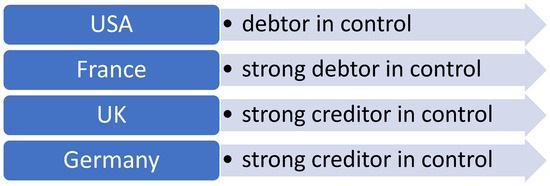
This article examines key aspects of corporate insolvency law. The main research jurisdictions are the US, England, France, and Germany. This study adopts a functional approach that compares different legal regimes of corporate insolvency law in light of the legislative changes related to the EU directive (EU) 2019/1023. This directive, to some extent, triggered a paradigm shift, leading to varying degrees of reform across all EU member states and even influencing non-EU jurisdictions. This article is structured into four parts. The introduction provides an overview of corporate insolvency laws. The second part focuses on directive (EU) 2019/1023 on preventive restructuring frameworks, which considers the requirements regarding the classes of creditors and the related procedures. The third section examines the differences and similarities in the conceptual framework of the corporate insolvency law in the selected jurisdictions, with particular emphasis on their approach—whether creditor-friendly or debtor-friendly—and their bankruptcy procedures. Finally, the last section highlights jurisdictional divergences. This article contributes to the understanding of corporate insolvency law as a complex international issue by comparing national approaches and offering legal recommendations.
Full article

Figure 1
Open AccessArticle
A Little Too Little, A Little Too Late: The Political Impact of Russia’s Anti-Corruption Enforcement
by
Marina Zaloznaya and William M. Reisinger
Laws 2025, 14(2), 20; https://doi.org/10.3390/laws14020020 - 21 Mar 2025
Abstract
Similarly to “wars” on drugs and terrorism, the fight against corruption has recently emerged as an attractive political tool. From Argentina and India to the United States and the Philippines, anti-corruption rhetoric has been successfully utilized by political outsiders to challenge establishment candidates.
[...] Read more.
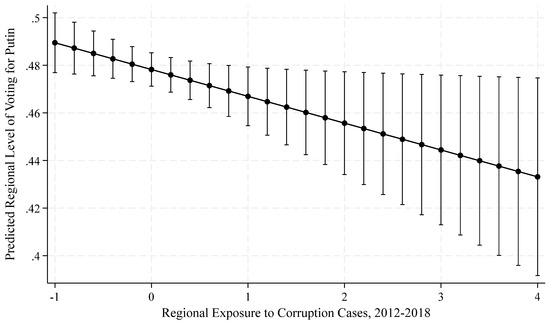
Similarly to “wars” on drugs and terrorism, the fight against corruption has recently emerged as an attractive political tool. From Argentina and India to the United States and the Philippines, anti-corruption rhetoric has been successfully utilized by political outsiders to challenge establishment candidates. It remains less clear, however, whether anti-corruption enforcement allows incumbent politicians to hold on to power. In this article, we use a comparative subnational design to analyze the impact of corruption prosecutions on electoral support for the president of Russia. By combining original survey data on popular political attitudes and behaviors as well as citizens’ own participation in petty corruption with official statistics on corruption prosecutions, on the one hand, and data on media coverage of regional corruption scandals, on the other, we reveal a small negative effect of anti-corruptionism on voting for Putin. Our data allow us to adjudicate among several theoretical mechanisms that may lead to this effect. We find that, although ordinary Russians dislike corruption and expect the federal government to fight it, Putin’s anti-corruption enforcement has failed to convince the population that he is the right man for the job. Some Russians, we argue, take the Kremlin’s prosecutions as an indicator of the regime’s failure to prevent corruption among its agents, while others resent the administration for trying to score political points through hyped-up and punitive anti-corruptionism.
Full article
(This article belongs to the Special Issue Fostering Integrity or Falling Short: The Role of Anti-Corruption Laws in Diverse Global Contexts)
►▼
Show Figures

Figure 1
Open AccessArticle
An Adaptive Conceptualisation of Artificial Intelligence and the Law, Regulation and Ethics
by
Ikpenmosa Uhumuavbi
Laws 2025, 14(2), 19; https://doi.org/10.3390/laws14020019 - 19 Mar 2025
Abstract
The description of a combination of technologies as ‘artificial intelligence’ (AI) is misleading. To ascribe intelligence to a statistical model without human attribution points towards an attempt at shifting legal, social, and ethical responsibilities to machines. This paper exposes the deeply flawed characterisation
[...] Read more.
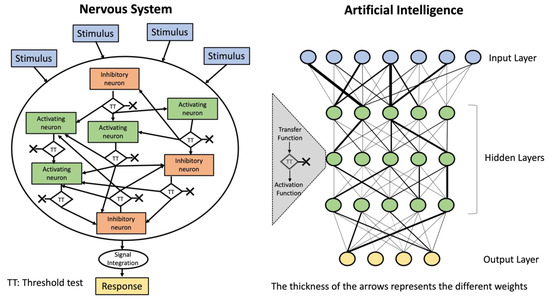
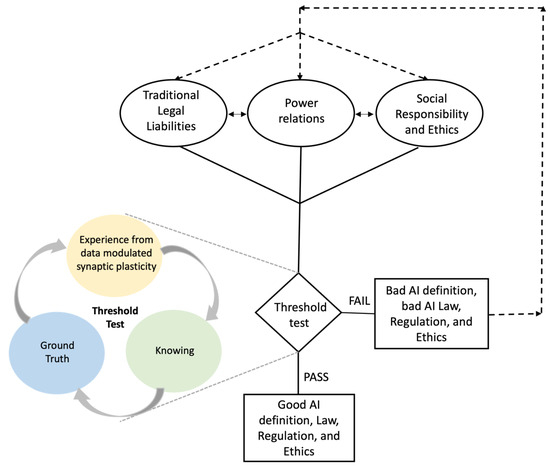
The description of a combination of technologies as ‘artificial intelligence’ (AI) is misleading. To ascribe intelligence to a statistical model without human attribution points towards an attempt at shifting legal, social, and ethical responsibilities to machines. This paper exposes the deeply flawed characterisation of AI and the unearned assumptions that are central to its current definition, characterisation, and efforts at controlling it. The contradictions in the framing of AI have been the bane of the incapacity to regulate it. A revival of applied definitional framing of AI across disciplines have produced a plethora of conceptions and inconclusiveness. Therefore, the research advances this position with two fundamental and interrelated arguments. First, the difficulty in regulating AI is tied to it characterisation as artificial intelligence. This has triggered existing and new conflicting notions of the meaning of ‘artificial’ and ‘intelligence’, which are broad and largely unsettled. Second, difficulties in developing a global consensus on responsible AI stem from this inconclusiveness. To advance these arguments, this paper utilises functional contextualism to analyse the fundamental nature and architecture of artificial intelligence and human intelligence. There is a need to establish a test for ‘artificial intelligence’ in order ensure appropriate allocation of rights, duties, and responsibilities. Therefore, this research proposes, develops, and recommends an adaptive three-elements, three-step threshold for achieving responsible artificial intelligence.
Full article
(This article belongs to the Topic Emerging Technologies, Law and Policies)
►▼
Show Figures

Figure 1
Open AccessArticle
Intellectual Property as a Strategy for Business Development
by
Ligia Isabel Beltrán-Urvina, Byron Fabricio Acosta-Andino, Monica Cecilia Gallegos-Varela and Henry Marcelo Vallejos-Orbe
Laws 2025, 14(2), 18; https://doi.org/10.3390/laws14020018 - 19 Mar 2025
Abstract
The objective of this research is to examine the role of intellectual property (IP) in fostering business development, particularly focusing on patent management in Ecuador and its alignment with international standards. The study employs a comparative analysis of Ecuadorian legislation against the framework
[...] Read more.
The objective of this research is to examine the role of intellectual property (IP) in fostering business development, particularly focusing on patent management in Ecuador and its alignment with international standards. The study employs a comparative analysis of Ecuadorian legislation against the framework established by the World Intellectual Property Organization (WIPO) to identify challenges and opportunities within the national IP system. Key methods include reviewing existing legal texts, interviewing stakeholders, and analyzing patent registration processes. The findings indicate that while Ecuador has made significant strides in harmonizing its IP laws with international treaties, such as the Patent Cooperation Treaty (PCT) and the Agreement on Trade-Related Aspects of Intellectual Property Rights (TRIPS), considerable barriers remain, particularly related to bureaucratic inefficiencies and a lack of technical resources in key institutions like the National Service of Intellectual Rights (SENADI). The conclusions highlight the need for enhanced efficiency and implementation of IP regulations to stimulate sustained innovation growth, attract national and foreign investments, and, ultimately, strengthen Ecuador’s competitiveness in a global economy. This research contributes to the understanding of how effective IP management can serve as a vital tool for economic development and innovation.
Full article
Open AccessReview
The Evolution of Mental Health Legislation in South Africa: Towards a Rights-Based Approach
by
Letitia Pienaar
Laws 2025, 14(2), 17; https://doi.org/10.3390/laws14020017 - 18 Mar 2025
Abstract
This contribution examines the human rights framework and legislative developments in South Africa on persons with mental illness, revealing that the initial focus of the legislation was on control and detention at the cost of the rights of mental health care users. Presently,
[...] Read more.
This contribution examines the human rights framework and legislative developments in South Africa on persons with mental illness, revealing that the initial focus of the legislation was on control and detention at the cost of the rights of mental health care users. Presently, under its Constitutional democracy, South Africa has progressive Mental Health Legislation focusing on the rights of mental health care users and the least restrictive means of treatment. The contribution considers the impact of the legislative developments on the human rights of mental health care users. There are, however, challenges with the implementation of the legislation most notably illustrated by the Life Esidimeni disaster where a mass deinstitutionalization project led to the loss of life. South Africa’s revised Mental Health Policy Framework holds a renewed commitment to respect a mental health care user’s right to dignity, integrity, privacy, and freedom of movement. This is one step closer to the realisation of the obligations created by the United Nations Convention on the Rights of Persons with Disabilities (CRPD). The contribution considers the 2018 concluding observations by the United Nations Committee on the Rights of Persons with Disabilities, which lays bare areas where yet further improvement is needed in South Africa to eradicate all forms of discrimination against persons with disabilities and, in particular, persons with mental illness Areas where progress have been made are highlighted. South Africa has made steady progress but needs to intensify its efforts to domesticize the CRPD.
Full article
(This article belongs to the Special Issue Regulating Mental Health: Crossing the Rubicon between Care and Control)
Open AccessArticle
The Fourteenth Amendment and University Intellectual Diversity
by
Christopher R. Green
Laws 2025, 14(2), 16; https://doi.org/10.3390/laws14020016 - 12 Mar 2025
Abstract
Under current Supreme Court doctrine under the First Amendment, constitutional complaints that a state university has selected its faculty on ideological grounds—that it has “cast a pall of orthodoxy over the classroom”, in the language of the court from 1967—face three barriers. States
[...] Read more.
Under current Supreme Court doctrine under the First Amendment, constitutional complaints that a state university has selected its faculty on ideological grounds—that it has “cast a pall of orthodoxy over the classroom”, in the language of the court from 1967—face three barriers. States may claim that an ideologically uniform faculty is required for the efficient performance of government functions, that it represents the state’s own speech, or that faculty’s expression of ideology is part of their jobs, subject to an uncertain exception for “expression related to academic scholarship or classroom instruction”. This article looks at these claims from the perspective that the Court has used with increasing frequency: the meaning expressed by the text of the Fourteenth Amendment in its original 1868 context. While there are strong arguments that the Fourteenth Amendment does not apply the First Amendment’s meaning as of 1791 against states, the Fourteenth Amendment does require that citizens of all political and religious creeds receive the same civil rights as similarly situated fellow citizens. However, the “civil rights” covered by the Fourteenth Amendment in 1868 excluded “political rights” to influence the government and serve on its behalf. State universities’ Fourteenth Amendment obligations of ideological neutrality thus run not directly to faculty, but to students. An ideologically slanted process of faculty selection violates students’ civil rights in the same way that a racially biased process of jury selection violates defendants’ rights to a fair trial.
Full article
(This article belongs to the Special Issue Civic Engagement, Justice, and the Law in a National and International Context)
Open AccessArticle
Judicial Narratives and ‘Reality’: A Thematic Analysis of References to Family Violence in Sentencing Remarks for the Offence of Threat to Kill
by
Jonathan Pears and Patricia Easteal
Laws 2025, 14(2), 15; https://doi.org/10.3390/laws14020015 - 11 Mar 2025
Abstract
For domestic and family violence (‘DFV’) offences, sentencing remarks present a unique opportunity for dialogue between the Court, the offender, the victim-survivor, and the public. At the point of sentencing an offender, the judicial officer provides a rationale for the sentence imposed. This
[...] Read more.
For domestic and family violence (‘DFV’) offences, sentencing remarks present a unique opportunity for dialogue between the Court, the offender, the victim-survivor, and the public. At the point of sentencing an offender, the judicial officer provides a rationale for the sentence imposed. This rationale includes a consideration of the impact of the offending on the victim, but can also carry narratives about the harms, dynamics, and outcomes of DFV offences. This article seeks to evaluate the narratives present within sentencing remarks for the offence of threat to kill occurring in a DFV context in the Australian jurisdictions of the Australian Capital Territory and Victoria. The authors use thematic analysis to compare themes generated within the judgments to the sentencing considerations required by the Crimes (Sentencing) Act 2005 (ACT) and the Sentencing Act 1991 (Vic). Our findings support the idea that if required to refer to the nature and dynamics of DFV in sentencing offenders, judicial officers’ understanding of DFV may be improved. We therefore suggest such requirements could potentially play a similar role in other jurisdictions.
Full article
Open AccessArticle
Inter-American Human Rights System and Social Change in Latin America
by
Martha Gutiérrez
Laws 2025, 14(2), 14; https://doi.org/10.3390/laws14020014 - 11 Mar 2025
Abstract
The role of human rights is increasingly subject to scrutiny and debate. However, historically, human rights functioned as powerful tools for social change. In this context, this paper explores the origin, evolution and impact of the Inter-American Human Rights System, analysing its impact
[...] Read more.
The role of human rights is increasingly subject to scrutiny and debate. However, historically, human rights functioned as powerful tools for social change. In this context, this paper explores the origin, evolution and impact of the Inter-American Human Rights System, analysing its impact from three perspectives. First, it reviews empirical studies that advocate distinguishing between compliance with the system’s orders and their broader impact. Case examples are presented to demonstrate how compliance with general orders, such as guarantees of non-repetition, can influence human rights practices across the region, even when compliance is only partial. The analysis highlights that impact extends beyond formal compliance, encompassing the strategies of human rights organisations, interactions between national and international spheres, and progress in the recognition and justiciability of rights, along with measures aimed at benefiting specific groups. Finally, the relationship between the region’s democratic development and the system’s relevance is explored, highlighting its remarkable adaptability to emerging realities and societal demands despite persistent challenges. In the face of prevailing scepticism, the system continues to function as a vital mechanism for promoting social transformation across Latin America.
Full article
(This article belongs to the Special Issue Rethinking Human Rights)
Open AccessArticle
Global Compacts and the EU Pact on Asylum and Migration: A Clash Between the Talk and the Walk
by
Gamze Ovacık and François Crépeau
Laws 2025, 14(2), 13; https://doi.org/10.3390/laws14020013 - 5 Mar 2025
Abstract
The current global mobility paradigm suffers from a great paradox. The illegality of human mobility is manufactured through restrictive migration and asylum policies, which claim to address the supposed challenges of human mobility, such as erosion of border security, burden on the labour
[...] Read more.
The current global mobility paradigm suffers from a great paradox. The illegality of human mobility is manufactured through restrictive migration and asylum policies, which claim to address the supposed challenges of human mobility, such as erosion of border security, burden on the labour market, and social disharmony. On the contrary, they reinforce them, resulting in strengthened anti-migrant sentiments at the domestic level. The contradiction is that the more restrictive migration policies are and the more they are directed at containment of human mobility, the more counterproductive they become. The fact that the policies of the destination states are shaped through the votes of their citizens, and migrants are never part of the conversation which would bring the reality check of their lived lives, is a defining factor that enables state policies preventing and deterring access to territory and containing asylum seekers elsewhere. We demonstrate that this is the dynamic behind the new EU Pact on Migration and Asylum, as it thickens the European borders even further through harsher border procedures and expanded externalisation of migration control. Whereas the Global Compacts represent the paradigm of facilitated mobility and are a significant step in the right direction for moving beyond the defined paradox, the EU Pact represents the containment paradigm and showcases that the tension between the commitments and the actions of states is far from being resolved. Through an assessment of the EU Pact on Migration and Asylum’s alignment with the Global Compacts, this article scrutinizes the trajectory of the global mobility paradigm since the adoption of the Global Compacts.
Full article
(This article belongs to the Topic Migration and Human Rights in the Age of the Global Compacts)
Open AccessArticle
The Lawfulness of Citizenship Deprivation: Comparing Australia and the UK
by
Guy Baldwin
Laws 2025, 14(2), 12; https://doi.org/10.3390/laws14020012 - 4 Mar 2025
Abstract
The rise in international terrorism has led to a rise in citizenship deprivation. Depriving a person of citizenship represents a harsh national security measure. Although both Australia and the UK have citizenship deprivation legislation, the judicial response has differed. In Australia, two laws
[...] Read more.
The rise in international terrorism has led to a rise in citizenship deprivation. Depriving a person of citizenship represents a harsh national security measure. Although both Australia and the UK have citizenship deprivation legislation, the judicial response has differed. In Australia, two laws providing for deprivation of citizenship have been found unconstitutional. In the UK, significant challenges to citizenship deprivation decisions have failed, including those relating to Shamima Begum, deprived of UK citizenship in 2019, whose request for permission to appeal in respect of the decision was rejected by the UK Supreme Court in August 2024. In this context, it is striking that despite the lesser degree of human rights protection under the Australian Constitution and federal statutes compared with the UK, the Australian courts may have arrived at a significantly rights protective approach to citizenship deprivation, leading to an important procedural safeguard by requiring courts to make decisions on citizenship deprivation. This underlines interesting features of the Australian system, in which the development of doctrines under a written constitution that limits legislative power, such as through the separation of powers, can sometimes lead to significant (if uneven) rights protective outcomes. Short of a shift in UK constitutional law doctrine around the separation of powers (which is unlikely), the Australian decisions cannot be mirrored in the UK. However, they may point towards the possibility of stronger procedural safeguards in the context of citizenship deprivation, as well as some potential human rights law implications.
Full article
(This article belongs to the Section Human Rights Issues)
Open AccessSystematic Review
A Systematic Review of Evidence-Based Alternative Models of Incarceration
by
Anamalia Suʻesuʻe, Dylan Pilger and Lorinda Riley
Laws 2025, 14(2), 11; https://doi.org/10.3390/laws14020011 - 26 Feb 2025
Abstract
►▼
Show Figures
While much of the American justice system utilizes punitive models of sentencing and incarceration, restorative justice (RJ) approaches provide a holistic alternative to wrongdoing, viewing offenses in terms of relationships and paying particular attention to victim and community needs. These alternative RJ approaches
[...] Read more.
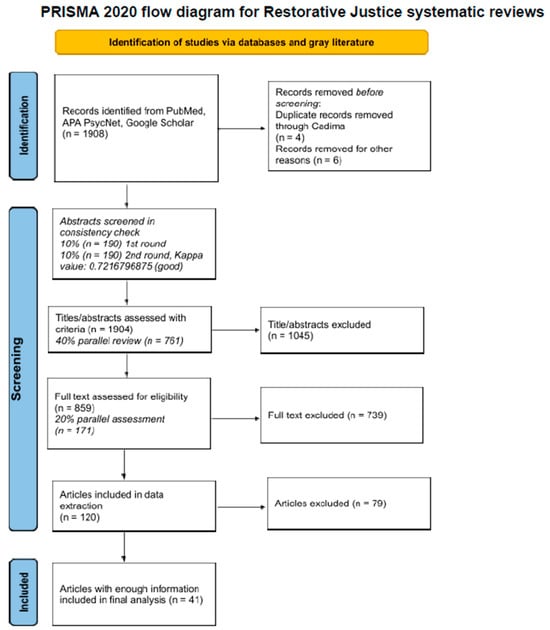
While much of the American justice system utilizes punitive models of sentencing and incarceration, restorative justice (RJ) approaches provide a holistic alternative to wrongdoing, viewing offenses in terms of relationships and paying particular attention to victim and community needs. These alternative RJ approaches have been shown to decrease recidivism and align with the values of those who have been most impacted by mass incarceration, including Indigenous populations. The purpose of this systematic review is to provide an overview of alternative models of incarceration utilizing RJ principles that could be adapted for a largely Indigenous population.
Full article

Figure 1
Open AccessArticle
Political Parties as “Great Schools” of Civic Education
by
Joseph Postell
Laws 2025, 14(1), 10; https://doi.org/10.3390/laws14010010 - 2 Feb 2025
Abstract
Current attempts to improve civic education through higher education should be supplemented by a focus on political parties, which have traditionally served as the “great schools” of civic education. America’s nineteenth-century parties drew voters out of their private concerns, engaged them in social
[...] Read more.
Current attempts to improve civic education through higher education should be supplemented by a focus on political parties, which have traditionally served as the “great schools” of civic education. America’s nineteenth-century parties drew voters out of their private concerns, engaged them in social life, and taught them to tolerate and bargain with each other. Legal changes over the past century have deprived them of the tools needed to fulfill this role. Policymakers should reconsider campaign finance laws that cripple parties, especially state and local organizations. Moreover, parties themselves should dedicate more time and resources to building a permanent presence in local communities and engaging citizens on the ground.
Full article
(This article belongs to the Special Issue Civic Engagement, Justice, and the Law in a National and International Context)
Open AccessArticle
In Pursuit of Civic Engagement in Texas: Leveraging Trust in a Changed Legal Landscape
by
Catherine Copeland, Amy O’Dell, Abigail Smith, Jessica Garcia and Boleslaw Z. Kabala
Laws 2025, 14(1), 9; https://doi.org/10.3390/laws14010009 - 23 Jan 2025
Abstract
Recent legislation in Texas changes the legal civic engagement landscape. With Diversity, Equity, and Inclusion programs now prohibited on public university campuses, advocates of affirmative steps to reach historically underserved groups may face unexpected obstacles. And recent Supreme Court decisions, on the use
[...] Read more.
Recent legislation in Texas changes the legal civic engagement landscape. With Diversity, Equity, and Inclusion programs now prohibited on public university campuses, advocates of affirmative steps to reach historically underserved groups may face unexpected obstacles. And recent Supreme Court decisions, on the use of race as a factor in college admissions, further increase the challenges. Due to these shifts in the goals public universities can legally pursue, what are the most appropriate civic engagement policy steps to eliminate barriers to success and realize a diverse student body? Building on the Town Hall program at Tarleton State University, and the specific ways in which it leverages trust, we make three recommendations: (1) Institutions should maintain an openness to outreach, through the leadership of student groups and invited guest speakers and other initiatives, to those on campus who struggle with the burden of invisibility; (2) Town Hall and related civic engagement programs should fine-tune the selection of advanced peer leaders, making it easier for them to pursue expertise in the classroom, in turn facilitating their ability to attract speakers as recommended in (1); and (3) institutions should ensure an opening for representatives to travel to underserved parts of the state, with the effect if not University-wide intention of increasing inclusion. Building on the research of Eric Morrow, Boleslaw Z. Kabala, and Christine Hartness in 2023, we seek to leverage trust for the sake of a genuinely inclusive environment, consistent with current legal limitations on civic engagement in Texas.
Full article
(This article belongs to the Special Issue Civic Engagement, Justice, and the Law in a National and International Context)
Open AccessArticle
Promoting Equal Protection and Regulatory Remedies for Balanced Civic Education
by
Peder Humlen
Laws 2025, 14(1), 8; https://doi.org/10.3390/laws14010008 - 21 Jan 2025
Abstract
This article examines the teaching of civic engagement in academic settings, focusing on its role in generating new knowledge and fostering social and personal action. The article proposes regulatory remedies to ensure a fair and balanced curriculum supporting diverse worldviews and productive discourse,
[...] Read more.
This article examines the teaching of civic engagement in academic settings, focusing on its role in generating new knowledge and fostering social and personal action. The article proposes regulatory remedies to ensure a fair and balanced curriculum supporting diverse worldviews and productive discourse, promoting student civic participation. The legal principle of equal protection, enshrined in the Fourteenth Amendment, serves as the foundation. The Fourteenth Amendment emphasizes equal treatment and opportunities for all, including access to a well-rounded education. By incorporating its principles into education, the article highlights the need to promote fair, civic education that empowers all students to participate actively in their communities. I recommend regulatory remedies to solidify education’s nature and foster a balanced curriculum. The proposed remedies ensure that various worldviews are embraced, promoting productive and amicable discourse among students. Creating an inclusive learning environment also allows students to engage in critical thinking and develop a deeper understanding of diverse perspectives, ultimately enhancing their civic participation. Furthermore, the article emphasizes the importance of regulatory safeguards against biased or exclusionary educational practices to ensure that all students have equal educational opportunities, regardless of their background or beliefs. By eliminating barriers and promoting a fair educational system, students can develop the necessary knowledge and skills to contribute to their communities actively. By incorporating the legal principle of equal protection with respect to perspectives represented on campus, the article advocates for legal and regulatory remedies to promote a fair and balanced curriculum that supports diverse worldviews.
Full article
(This article belongs to the Special Issue Civic Engagement, Justice, and the Law in a National and International Context)
Open AccessArticle
Advancing Asset Tokenization in the European Union and Latvia: A Regulatory and Policy Perspective
by
Nauris Jūrmalis, Anželika Berķe-Berga and Marta Urbāne
Laws 2025, 14(1), 7; https://doi.org/10.3390/laws14010007 - 16 Jan 2025
Abstract
Our study examines the regulatory challenges and opportunities of asset tokenization within the context of the European Union (EU), emphasizing the balance between technological innovation and investor protection in the digital economy. Focusing on 2023 EU Markets in Crypto-Assets Regulation and its application
[...] Read more.
Our study examines the regulatory challenges and opportunities of asset tokenization within the context of the European Union (EU), emphasizing the balance between technological innovation and investor protection in the digital economy. Focusing on 2023 EU Markets in Crypto-Assets Regulation and its application in Latvia, we utilize comparative legal and integrative literature review methodologies to explore how regulatory frameworks can enhance investor accessibility, liquidity, and transparency in digital transactions. Our findings emphasize the importance of strong legal frameworks in promoting economic growth and protecting investors, thereby contributing to a more inclusive financial ecosystem. By examining the regulatory landscape for distributed ledger technology, we provide insights into how regulations can balance innovation in asset management with the imperative of investor protection. We offer a broad analysis of the intersection between legal frameworks and technological advancements in Latvia, illustrating how diverse regulatory approaches can support both economic development and investor interests. Our research originality lies in its focus on the EU’s regulatory diversity, particularly in Latvia, and its implications for broader European and international regulatory environments. Our study contributes to ongoing discussions on optimizing regulatory strategies to facilitate secure and advantageous financial technologies, reflecting the diversity of legal and economic approaches across Europe.
Full article
Open AccessArticle
Termination Clauses in Common Law and Civil Law: A Comparative Corpus-Based Analysis of English–Italian Terms of Service
by
Patrizia Giampieri
Laws 2025, 14(1), 6; https://doi.org/10.3390/laws14010006 - 12 Jan 2025
Abstract
In common law, the “termination” of a contract entails several consequences, particularly on the basis of the context where such a term is used and, from a linguistic perspective, depending on the words that accompany it (e.g., “termination for cause” vs. “termination without
[...] Read more.
In common law, the “termination” of a contract entails several consequences, particularly on the basis of the context where such a term is used and, from a linguistic perspective, depending on the words that accompany it (e.g., “termination for cause” vs. “termination without cause”). In Italian civil law, there are manifold translations of the lemma “terminate”, which are investigated and discussed in this paper. To this aim, English and Italian comparable corpora of terms of service (i.e., online terms and conditions of web hosting services) are consulted, where similar clauses are retrieved and words are analyzed in context. In this way, the complex nature and the manifold meanings of the lemma “terminate” are unveiled, and Italian (full or partial) equivalents are proposed. The paper’s findings highlight that in order to explore the renderings of complex terms, such as “terminate”, not only are linguistic tools, such as ad hoc corpora, necessary, but also legal resources, such as statutory documents and case law. In addition, solid knowledge of the subject matter addressed is necessary. In this respect, this paper unveils corpus-based methodologies and research strategies to cope with the intricacies of the translation(s) of “termination” clauses.
Full article
Open AccessArticle
Antibiotic Resistance, Polycentricity, and the Regulation of Antibiotic Prescribing in the Primary Care Setting
by
David J. Carter
Laws 2025, 14(1), 5; https://doi.org/10.3390/laws14010005 - 10 Jan 2025
Abstract
Antimicrobial resistance (AMR) is an urgent global challenge requiring an effective regulatory response, particularly regarding the governance of antibiotic prescribing. Dominant understandings of prescribing, however, are marked by a vision of the regulatory field with a strong ‘centre’—namely, the prescriber—whose actions are given
[...] Read more.
Antimicrobial resistance (AMR) is an urgent global challenge requiring an effective regulatory response, particularly regarding the governance of antibiotic prescribing. Dominant understandings of prescribing, however, are marked by a vision of the regulatory field with a strong ‘centre’—namely, the prescriber—whose actions are given a central role in directing the flow of events around AMR through a form of command-and-control rule. This insistence on a strong ‘centre’ and upon juridical forms of governance is de-centred in many contemporary conceptions of regulation. Drawing on data from interviews with patients who are enmeshed within AMR-related regulatory systems in the Australian primary care setting, this article argues that this regulatory field is polycentric in nature with signs that multiple regulatory actors influence prescribing and thus AMR-related outcomes. This polycentricity radically alters the capacity of individual actors to influence the flow of events around prescribing and indicates different regulatory approaches are required to realise objectives regarding AMR.
Full article
(This article belongs to the Section Health Law Issues)
Open AccessArticle
Unkept Promises: On the Implementation of the OECD Anti-Bribery Convention in Korea
by
Dae Un Hong and Jae Sun Kim
Laws 2025, 14(1), 4; https://doi.org/10.3390/laws14010004 - 3 Jan 2025
Abstract
While the Organization for Economic Cooperation and Development (OECD)’s Anti-Bribery Convention is often considered a success in the fight against global corruption, ensuring its implementation remains challenging. As evidenced by the sustained decline in Transparency International’s ratings, the Korean government does not actively
[...] Read more.
While the Organization for Economic Cooperation and Development (OECD)’s Anti-Bribery Convention is often considered a success in the fight against global corruption, ensuring its implementation remains challenging. As evidenced by the sustained decline in Transparency International’s ratings, the Korean government does not actively enforce anti-bribery legislation against companies and individuals engaged in business activities abroad. To support this argument, this article reviews the Korean legal apparatus designed to control foreign bribery and examines why the relevant authorities have insufficiently enforced them. Specifically, this paper discusses the Foreign Bribery Prevention Act, its legislative history, how the Korean legislature has failed to implement the OECD Working Group’s recommendations in a timely manner, and the consequences of this failure. Through a case study, this paper compares the practices of Korean law enforcement authorities with those of their counterparts abroad, particularly in the United States. This paper also illustrates how the traditional leniency of Korean prosecutors and judges toward bribe giving, especially by large conglomerates, has affected the enforcement of the relatively new legal apparatus designed to combat bribery of foreign public officials. Furthermore, a cultural leniency toward bribery, coupled with the Korean government’s unwillingness to raise public awareness of foreign bribery crimes and their punishments, poses a significant challenge to combating foreign bribery.
Full article
(This article belongs to the Special Issue Criminal Liability and Global Compliance)
Highly Accessed Articles
Latest Books
E-Mail Alert
News
Topics
Topic in
Laws, Social Sciences, Societies, World, Climate
Migration and Human Rights in the Age of the Global Compacts
Topic Editors: James C. Simeon, Elspeth GuildDeadline: 31 July 2025
Topic in
Economies, Energies, Environments, Forecasting, Laws
Energy Policy, Regulation and Sustainable Development—2nd Edition
Topic Editors: Grzegorz Mentel, Mirela Panait, Xin ZhaoDeadline: 31 December 2025
Conferences
Special Issues
Special Issue in
Laws
Cybercrime in Global and National Dimensions: Challenges, Impacts, and Solutions
Guest Editor: Kyung-Shick ChoiDeadline: 15 April 2025
Special Issue in
Laws
An Evaluation of Gang Intervention Strategies
Guest Editor: Justin J. JosephDeadline: 15 April 2025
Special Issue in
Laws
The Shifting Sands of Refugee Protection: Normativity, Crisis, and Contemporary UK Asylum
Guest Editors: Reuven (Ruvi) Ziegler, Alex Powell, Raawiyah RifathDeadline: 30 April 2025
Special Issue in
Laws
Global Threats in the Illegal Wildlife Trade and Advances in Response
Guest Editors: Nicholas Pamment, Anne-Marie WeedenDeadline: 15 May 2025